


Business Parking Lot Line Painting: A Complete Guide

Updated: Sep 16
Business parking lot line painting is one of the most overlooked yet essential parts of commercial property upkeep. Faded, uneven, or missing lines create confusion for drivers and pedestrians, and they can even expose property owners to liability. Fortunately, a fresh coat of professionally applied paint solves the problem quickly and affordably, protecting both the surface and the people who use it.
Throughout this guide, you will learn what business parking lot line painting involves, why it matters for Virginia property owners, and how to plan a project that stays on budget and on schedule. In addition, you will find a step-by-step breakdown of the professional process and answers to the most common questions property managers ask.
Quick answer: Business parking lot line painting is the process of applying durable traffic paint to mark parking stalls, drive lanes, fire zones, and ADA-accessible spaces on commercial pavement. It should be refreshed every 12 to 24 months to remain visible, safe, and code compliant.
What Is Business Parking Lot Line Painting?
Business parking lot line painting is the application of specially formulated traffic paint to a commercial asphalt or concrete surface. Its purpose is straightforward: define where vehicles park, how traffic flows, and where pedestrians and accessible parking are located. Consequently, it is one of the simplest ways to improve both safety and curb appeal.
In practice, this work covers more than straight parking stalls. It also includes directional arrows, fire lane text, curb painting, loading zone markings, and ADA-compliant handicap symbols. For a deeper look at accessibility requirements, the benefits of ADA-compliant line marking are worth reviewing before any restriping project begins.
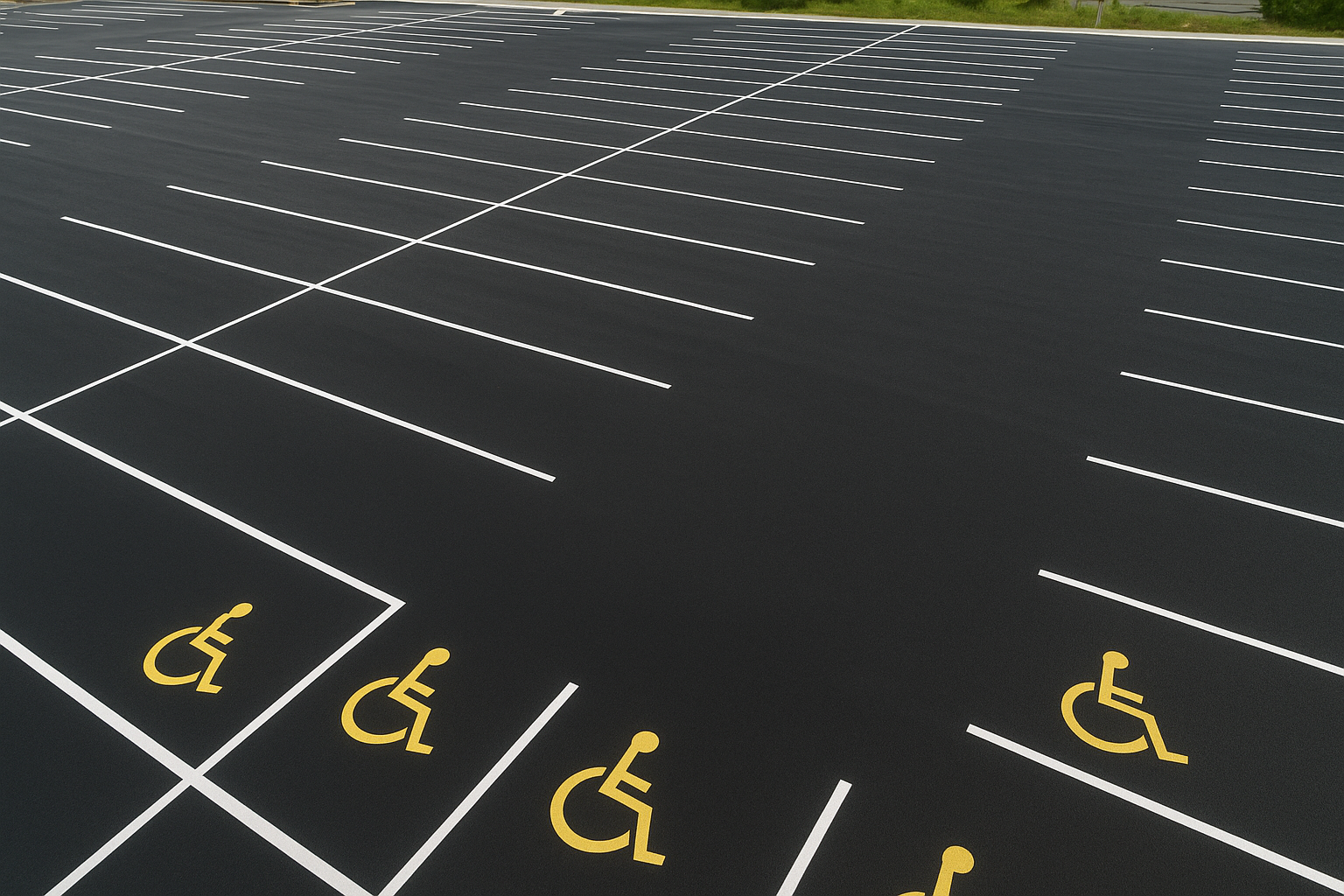
A well-marked commercial lot after professional business parking lot line painting. For a deeper walkthrough, see our News and Insights.
Why Commercial Line Striping Matters for Property Owners
Commercial line striping does far more than tidy up appearances. Above all, it directly affects safety. Clear lines reduce accidents by guiding drivers into designated spaces and keeping pedestrian paths free of vehicle traffic. Similarly, fire lanes and loading zones marked in bright, visible paint help emergency vehicles and delivery trucks move efficiently.
Furthermore, well-maintained markings signal professionalism to customers, tenants, and visitors. A retail center or office park with crisp lines and legible signage feels safer and better managed than one with faded, mismatched paint. As a result, property managers who invest in regular restriping often see improved tenant satisfaction and fewer complaints.
Legal and Compliance Considerations
Local municipalities and federal accessibility law both play a role in parking lot design. Specifically, the Americans with Disabilities Act (ADA.gov) sets minimum requirements for accessible spaces based on total lot capacity. Missing or incorrect ADA markings can lead to fines, complaints, or lawsuits, so accuracy matters just as much as appearance.
Key Elements of Professional Parking Lot Striping
Professional parking lot striping involves several coordinated elements rather than a single simple task. Understanding each piece helps property owners evaluate contractor proposals and set realistic expectations.
First, layout planning ensures stall widths, aisle widths, and turning radii meet local code. Next, surface preparation removes debris and old paint so new lines bond correctly. Finally, application technique, paint quality, and curing time all determine how long the finished job will last. According to industry data, correctly applied traffic paint can last up to two years under moderate traffic, while poor preparation can cut that lifespan in half.
ADA-Compliant Handicap Markings
ADA-compliant handicap markings require exact stall dimensions, the international accessibility symbol, and correctly placed signage. Because requirements vary slightly by state and municipality, it helps to work with a contractor familiar with Virginia's local codes. Reviewing why ADA-compliant line marking benefits everyone can clarify what inspectors typically look for.
How Often Should Lines Be Repainted?
Most commercial lots need fresh paint every 12 to 24 months, though high-traffic retail centers may need touch-ups sooner. For a detailed breakdown of timing factors, see this guide on how often you should repaint parking lot lines.
The Step-by-Step Line Painting Process
Understanding the process behind business parking lot line painting helps property owners plan around the project with minimal disruption. Below is the typical sequence a professional crew follows.
Inspect and clean the surface. Crews sweep or power wash the pavement to remove debris, dirt, and old paint residue so new lines adhere properly.
Measure and lay out the design. Technicians use chalk lines and measuring wheels to plan stall widths, aisles, and accessible spaces according to code.
Apply traffic paint with a striping machine. A calibrated machine lays down straight, consistent lines at the correct width for durability and visibility.
Add stencils and ADA symbols. Handicap symbols, directional arrows, and fire lane text are painted using precise stencils.
Allow curing and reopen the lot. The area is barricaded while paint cures fully before vehicles return, protecting the fresh lines.
Contractors experienced in professional line striping services often complete this entire process for an average lot within a single day, minimizing disruption to daily business operations.
A calibrated striping machine ensures straight, even lines during business parking lot line painting. For a deeper walkthrough, see our News and Insights.
Choosing a Professional Line Painting Contractor
Choosing the right contractor is arguably the most important decision in the entire project. Above all, look for a company with proven local experience, proper equipment, and transparent pricing. In particular, a contractor should be able to explain how they handle ADA layout requirements and municipal code compliance without hesitation.
Master Markings, for example, provides professional parking lot painters throughout Virginia who specialize in precise, long-lasting markings for property managers, HOAs, retail centers, and municipalities. Their approach combines efficient scheduling with attention to detail, so lots stay open for business as much as possible during the project. For a deeper walkthrough, see our News and Insights.
Before hiring anyone, it helps to review past project photos, ask about paint type, and confirm turnaround time. For useful field guidance, this collection of expert line striping tips outlines what separates a durable job from a short-lived one.
Common Mistakes and Cost Factors to Know
Even a routine project can go wrong without the right preparation. In particular, skipping surface cleaning, using low-grade paint, or ignoring local layout codes are the most frequent errors property owners encounter. Each of these mistakes shortens the lifespan of the finished lines and can create compliance headaches down the road.
Cost, meanwhile, depends on several variables: lot size, number of stalls, paint quality, and the amount of ADA signage required. Smaller lots may cost a few hundred dollars, while large retail or municipal properties can run into the thousands. Getting a detailed quote upfront, rather than a rough estimate, helps avoid surprises once work begins.
Weather and Seasonal Timing
Weather plays a bigger role than many property owners expect. Traffic paint needs dry conditions and moderate temperatures to cure correctly, so late spring through early fall tends to work best in Virginia's climate. Scheduling around forecasted rain also prevents wasted paint and uneven results.
ADA-compliant symbols are a critical part of any business parking lot line painting project. For a deeper walkthrough, see our News and Insights.
Frequently Asked Questions
What is business parking lot line painting?
Business parking lot line painting is the process of applying durable traffic paint to a commercial pavement surface to mark parking stalls, drive lanes, fire zones, and accessibility spaces. It creates order, guides traffic safely, and helps property owners meet local and ADA regulations.
How often should business parking lot line painting be redone?
Most commercial lots need restriping every 12 to 24 months, depending on traffic volume and climate exposure. High-traffic retail lots or roadways with heavy sun and snow exposure often need touch-ups sooner.
Why is business parking lot line painting important for safety?
Clear, visible lines reduce collisions, guide pedestrians safely, and prevent confusion during peak hours. Faded lines increase liability risk for property owners if an accident occurs on unclear pavement.
How much does business parking lot line painting cost?
Costs typically range from a few hundred dollars for small lots to several thousand for large retail or municipal properties. Pricing depends on lot size, number of stalls, paint type, and ADA marking requirements.
What paint is used for parking lot line painting?
Professionals typically use water-based or solvent-based traffic paint formulated for durability under vehicle traffic and weather exposure. Reflective additives are sometimes included to improve nighttime visibility.
How long does parking lot line painting take to dry?
Most traffic paint dries to the touch within 15 to 30 minutes and is safe for light traffic within an hour under good weather conditions. Full curing can take up to 24 hours, so lots are often striped during off-peak hours.
What is the difference between parking lot striping and seal coating?
Parking lot striping refers specifically to painting lines and markings on the pavement surface. Seal coating is a separate protective layer applied to asphalt to prevent cracking and water damage, and it is usually done before restriping.
Are ADA-compliant markings required for all commercial parking lots?
Yes, businesses open to the public in the United States must provide a minimum number of accessible parking spaces marked according to ADA standards. Requirements vary based on total parking capacity.
What time of year is best for parking lot line painting?
Late spring through early fall is ideal in Virginia because dry, mild temperatures help paint cure properly. Cold or wet conditions can cause paint to peel prematurely.
Can business parking lot line painting be done without closing the lot?
Many contractors work in sections or during off-hours to minimize disruption to daily operations. Full closures are usually only necessary for very small lots or same-day projects.
What are common mistakes in parking lot line painting?
Common mistakes include skipping surface cleaning, using low-grade paint, ignoring local ADA layout codes, and painting in poor weather. These errors shorten line lifespan and can create compliance issues.
How do I choose a professional line painting contractor?
Look for a contractor with local experience, proper equipment, clear pricing, and knowledge of ADA and municipal code requirements. Checking references and past project photos also helps confirm quality.
What equipment is used for professional line striping?
Professionals use walk-behind or ride-on striping machines with calibrated spray tips, along with stencils for symbols and numbers. Measuring wheels and chalk lines help ensure accurate, even spacing.
How long do professionally painted parking lot lines last?
High-quality traffic paint applied correctly typically lasts one to two years before noticeable fading. Lifespan depends on traffic volume, sun exposure, and winter plowing or salt use.
Does weather affect parking lot line painting results?
Yes, temperature, humidity, and precipitation all affect how paint adheres and cures. Most professionals avoid painting when rain is expected within 24 hours or when temperatures fall below 50 degrees Fahrenheit.
Final Thoughts
In summary, business parking lot line painting protects both people and property while keeping commercial lots compliant and professional. From ADA-compliant handicap symbols to fire lane markings, every line serves a purpose beyond appearance. Therefore, scheduling regular restriping every one to two years is a small investment that pays off through improved safety and reduced liability.
Whether you manage a retail center, an HOA community, or a municipal roadway, working with an experienced local contractor makes the process simple. For more information on pavement maintenance solutions, including seal coating and crack repair, visit Master Markings to request a project quote. You can also review general guidance from the Wikipedia overview of road surface marking and the Federal Highway Administration's Manual on Uniform Traffic Control Devices for additional technical background.

