


Commercial Asphalt Crack Repair Guide for Virginia

Updated: Sep 16
Commercial asphalt crack repair is the process of sealing or filling cracks in parking lots, roadways, and other paved surfaces to stop water intrusion, halt structural damage, and avoid costly resurfacing. For property managers and business owners across Virginia, small cracks left untreated can quickly widen into potholes, safety hazards, and expensive repairs. This guide covers why cracks form, how professionals fix them, what it costs, and how routine maintenance protects your pavement investment for years to come.
Quick Answer: Commercial asphalt crack repair fills or seals cracks with hot rubberized sealant or cold-pour filler, stopping water damage before it reaches the pavement base. Most lots benefit from crack sealing every 3 to 5 years, paired with periodic seal coating for full protection.
What Is Commercial Asphalt Crack Repair?
Commercial asphalt crack repair is a pavement preservation treatment that closes cracks before moisture reaches the sub-base layer beneath the asphalt. In short, it protects the structural integrity of a parking lot or roadway by keeping water out. Technicians clean debris from each crack, then apply either a hot rubberized sealant or a cold-pour filler, depending on crack width and movement.
Because Virginia experiences hot summers and freezing winters, pavement expands and contracts constantly. As a result, even well-built lots develop hairline cracks within a few years of installation. Addressing these cracks early is far less disruptive than waiting for full-depth failures that require milling and repaving.
Why Crack Sealing Matters for Virginia Commercial Properties
Property managers, HOAs, and retail centers rely on their parking lots to create a safe, professional first impression. Consequently, cracked or crumbling pavement can turn away customers and expose owners to liability claims from trip-and-fall incidents. In addition, cracked pavement near accessible parking spaces can create ADA compliance concerns that carry legal risk.
According to the Federal Highway Administration, timely pavement preservation treatments like crack sealing can extend the service life of asphalt by six to ten years compared to no maintenance at all. That single fact underscores why routine crack repair service is one of the most cost-effective investments a property owner can make. Similarly, the Asphalt Institute notes that pavement preservation costs a fraction of full reconstruction when performed on schedule.
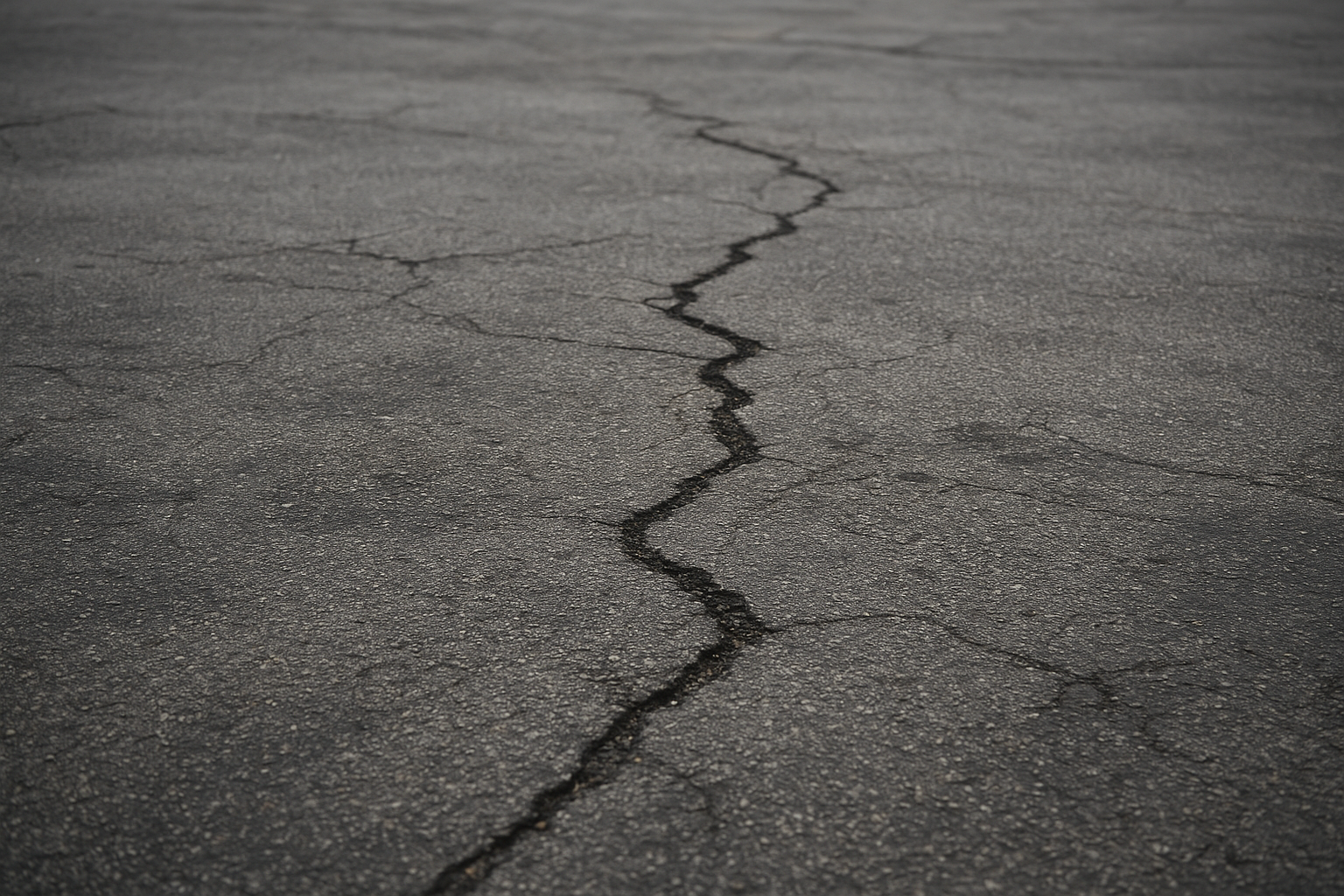
Untreated cracks like this one are prime candidates for commercial asphalt crack repair before winter moisture causes further damage. For a deeper walkthrough, see our News and Insights.
Common Causes of Pavement Cracking
Understanding why cracks form helps property managers plan smarter maintenance schedules. Above all, water is the enemy of asphalt, since it weakens the compacted base beneath the surface layer. The most frequent causes include:
Freeze-thaw cycles that expand water trapped in small pores, heavy delivery trucks and repeated traffic loads, UV exposure that dries out the asphalt binder over time, and poor original installation or inadequate base compaction. Furthermore, tree roots near parking lot edges and improper drainage can accelerate crack formation in specific zones. For a deeper look at prevention strategies, this guide on minimizing driveway cracks applies many of the same principles to larger commercial lots.
Step-by-Step Commercial Asphalt Crack Repair Process
Professional contractors follow a consistent process to ensure repairs last through Virginia's weather swings. Here is how a typical project unfolds:
Inspect and assess: Technicians walk the lot to map crack widths, depths, and any alligator cracking that may need deeper repair.
Clean the cracks: Compressed air or wire brushing removes dirt and vegetation so sealant can bond properly.
Apply hot rubberized sealant: Heated sealant is poured directly into cracks, filling them completely without pooling on the surface.
Level and finish: A squeegee tool smooths sealant flush with the surrounding pavement to prevent tripping hazards.
Cure and reopen: Sealant cures for roughly thirty minutes to a few hours before traffic returns to the area.
Crack Filling vs. Crack Sealing: Choosing the Right Method
Not every crack needs the same treatment. In particular, non-working cracks that stay stable year-round can often be handled with a simpler cold-pour filler. On the other hand, working cracks that expand and contract with temperature changes require flexible hot rubberized sealant to hold up long-term.
Therefore, an experienced crack repair contractor evaluates each crack individually rather than applying one blanket solution across the entire lot. This approach avoids wasted material while ensuring the pavement gets the right level of protection. Homeowners dealing with smaller cracks can find similar guidance in this resource on crack filling for driveways.
How Much Does Commercial Asphalt Crack Repair Cost?
Cost varies based on crack severity, total linear footage, and site accessibility. Generally speaking, most commercial properties pay between $0.75 and $3.00 per linear foot for professional crack sealing. Larger properties with ongoing maintenance contracts often secure lower per-foot pricing because contractors can schedule work more efficiently.
Meanwhile, ignoring cracks tends to cost far more in the long run. A crack that costs a few dollars per foot to seal today can turn into a pothole repair costing hundreds of dollars per square yard once water undermines the base layer. As a result, budgeting for annual or biannual crack repair almost always saves money over a property's lifetime.
Applying hot rubberized sealant is a key step in commercial asphalt crack repair for parking lots. For a deeper walkthrough, see our News and Insights.
When to Call Professional Pavement Crack Repair Services
While tiny hairline cracks might seem minor, several warning signs indicate it is time to call a professional. Specifically, cracks wider than a quarter inch, spreading networks of cracks, standing water after rain, or cracking near curb lines and accessible parking spots all warrant a professional evaluation.
In addition, municipalities and HOAs managing multiple properties benefit from scheduled inspections rather than reactive repairs. This proactive approach, similar to what's outlined in this overview of commercial parking lot restoration, keeps pavement compliant, safe, and visually consistent across an entire portfolio of properties.
Preventing Future Cracks with Seal Coating and Maintenance
Crack repair works best as part of a broader maintenance plan. Specifically, asphalt seal coating applied after crack repair shields the entire surface from UV rays, oil spills, and moisture that cause new cracks to form. Together, these two services extend pavement life significantly compared to either treatment alone.
Property owners who repair driveways at home follow the same logic; this piece on repairing asphalt driveways explains how sealing and crack maintenance work together on a smaller scale. For commercial lots, pairing routine crack repair with seal coating every two to three years is generally the most cost-effective long-term strategy, as detailed further at Master Markings.
Frequently Asked Questions
What is commercial asphalt crack repair?
Commercial asphalt crack repair is the process of filling or sealing cracks in parking lots, roadways, and pavement to stop water intrusion and prevent potholes. It typically involves cleaning the crack, applying a hot or cold sealant, and finishing the surface flush.
How long does crack sealing last on a parking lot?
Properly applied crack sealant typically lasts 3 to 5 years before it needs reapplication. Lifespan depends on climate, traffic volume, and the quality of the sealant used.
Why do commercial parking lots develop cracks in the first place?
Cracks form from a combination of water infiltration, freeze-thaw cycles, heavy vehicle traffic, and natural aging of the asphalt binder. Virginia's seasonal temperature swings make this especially common.
What's the difference between crack filling and crack sealing?
Crack filling uses a simpler asphalt emulsion for non-moving, low-traffic cracks, while crack sealing uses a flexible, heated rubberized material designed for working cracks. Sealing generally lasts longer and costs more.
How much does commercial asphalt crack repair cost?
Most commercial properties pay between $0.75 and $3.00 per linear foot for crack sealing, depending on crack severity and lot size. Larger contracts with routine maintenance plans often reduce the per-foot rate.
How long does the crack repair process take to complete?
A typical commercial lot can be treated in one to two days, depending on square footage and the number of cracks. Cure time before reopening to traffic usually ranges from 30 minutes to a few hours.
Can commercial asphalt crack repair be done in cold weather?
Crack sealing works best when temperatures are above 40°F, since cold asphalt becomes brittle and sealant adhesion suffers. Most contractors schedule repairs in spring or fall for the best results.
What happens if pavement cracks are left unrepaired?
Unrepaired cracks allow water to seep into the base layer, which weakens the sub-base and leads to potholes and alligator cracking. This can turn a low-cost repair into a full resurfacing project.
How often should a commercial parking lot be inspected for cracks?
Property managers should inspect pavement at least twice a year, ideally in early spring and late fall. Frequent inspection catches small cracks before they widen into costly structural damage.
Is crack repair the same service as asphalt seal coating?
No, crack repair and seal coating are separate but complementary services. Cracks are typically sealed first, and seal coating is applied afterward to protect the entire surface.
What is the biggest mistake property managers make with crack repair?
The most common mistake is waiting too long to address small cracks, allowing them to spread and deepen. Delayed maintenance almost always increases the total repair cost.
Should I hire a professional or attempt DIY commercial crack repair?
Professional crack repair is strongly recommended for commercial properties because of the equipment, hot-pour materials, and traffic control needed for a durable result. DIY patch kits rarely hold up under heavy commercial traffic.
Does ADA compliance factor into commercial asphalt crack repair?
Yes, cracked or uneven pavement near accessible parking spaces and pathways can create ADA compliance issues. Repairing cracks promptly helps keep handicap-accessible routes safe and code-compliant.
A well-maintained lot after crack repair and seal coating reflects the results of consistent commercial asphalt crack repair programs. For a deeper walkthrough, see our News and Insights.
Final Thoughts on Protecting Your Pavement
In summary, commercial asphalt crack repair is one of the simplest ways to protect a parking lot's structural integrity while avoiding far more expensive repaving costs down the road. From cleaning and sealing individual cracks to pairing repairs with regular seal coating, a consistent maintenance schedule keeps pavement safe, compliant, and attractive year after year. Ultimately, property managers, HOAs, and business owners throughout Virginia who invest in timely crack repair protect both their bottom line and the safety of everyone who uses their parking lots. For a closer look at professional options in your area, visit Master Markings to discuss a maintenance plan tailored to your property.

