


Traffic Line Marking Virginia: Complete Guide & Tips

Updated: Sep 16
Traffic line marking Virginia contractors provide is what keeps parking lots, roadways, and commercial properties safe, organized, and legally compliant. Whether you manage a retail center, an HOA, or a municipal roadway, crisp lines guide drivers, protect pedestrians, and reduce liability. In this guide, you will learn what traffic line marking involves, how much it costs in Virginia, and how to choose a contractor you can trust.
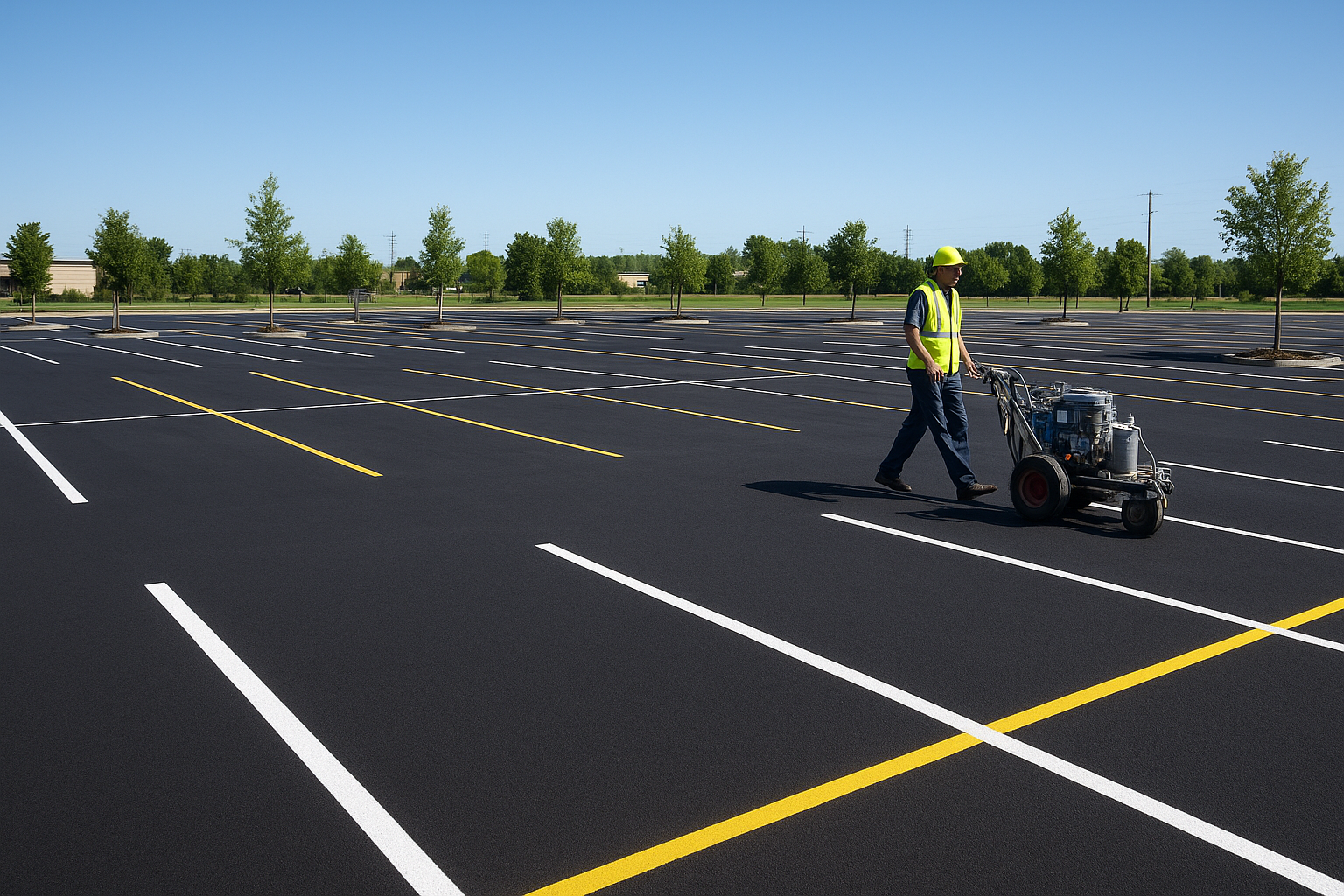
Fresh traffic line marking Virginia crews apply to a commercial parking lot for improved safety and flow.
Traffic Line Marking Virginia: What Property Owners Need to Know
Direct answer: Traffic line marking Virginia services involve painting or applying thermoplastic lines, arrows, and symbols on parking lots and roadways to direct traffic, mark accessible spaces, and meet safety codes. Contractors handle everything from initial layout to final paint application.
In practice, this work covers far more than a few painted stripes. For example, it includes parking stall lines, fire lane markings, ADA-compliant handicap spaces, stop bars, and directional arrows. As a result, well-executed line marking reduces confusion, prevents fender-benders, and helps property owners avoid code violations.
Furthermore, Virginia's climate plays a role in how often markings need attention. Hot summers and freezing winters both accelerate paint wear, so property managers throughout the Commonwealth typically schedule refresh projects on a regular cycle rather than waiting until lines disappear entirely.
Why Line Striping Matters for Safety and Compliance
Above all, line striping exists to protect people. Clear markings tell drivers where to park, where pedestrians cross, and where emergency vehicles need unobstructed access. Consequently, faded or missing lines are one of the most common causes of parking lot disputes and minor collisions.
In addition, compliance matters just as much as safety. Municipalities and insurance providers often require documented proof that ADA spaces and fire lanes meet current standards. According to the Americans with Disabilities Act guidelines, accessible parking spaces must meet specific dimension and signage requirements, and Virginia properties are expected to follow these rules closely.
Therefore, neglecting line marking is not just a cosmetic issue. It can expose property owners to fines, lawsuits, and increased insurance scrutiny, particularly for retail centers and municipalities with heavy public foot traffic.
Precision equipment ensures every line meets Virginia safety and accessibility standards.
Types of Traffic and Safety Line Markings in Parking Lots
Not all markings serve the same purpose. Specifically, most Virginia commercial properties need a combination of the following:
Standard parking stalls: Straight lines defining individual spaces, typically 9 feet wide.
ADA-compliant handicap markings: Wider accessible spaces with the international symbol and proper signage.
Fire lanes and no-parking zones: Red or yellow curb painting and lettering restricting access.
Directional arrows and stop bars: Guiding traffic flow at entrances, exits, and intersections.
Crosswalks and pedestrian zones: High-visibility markings near building entrances.
Similarly, roadway projects often require reflective thermoplastic materials rather than standard paint, since public roads see far heavier traffic volumes and demand longer-lasting durability. You can review official design standards in the Manual on Uniform Traffic Control Devices published by the Federal Highway Administration.
How the Pavement Marking Process Works: Step-by-Step
Understanding the process helps property owners plan around minimal disruption. Here is what a typical project looks like:
Inspect and prepare the surface. A contractor inspects the asphalt for cracks, potholes, or faded existing lines, then cleans debris and oil stains so new paint adheres properly to the surface.
Layout and measure the plan. Technicians measure and chalk-line the layout for parking stalls, ADA spaces, fire lanes, and directional arrows according to local code requirements and site specifications.
Apply traffic paint or thermoplastic. Using calibrated striping machines, crews apply water-based traffic paint or thermoplastic material in straight, uniform lines with consistent thickness and coverage across the entire lot.
Cure, inspect, and reopen. The markings are left to cure for the recommended time, then inspected for consistency and compliance before barricades are removed and the lot reopens to traffic.
Because paint needs time to cure, most projects are scheduled overnight or during low-traffic hours. As a result, business operations rarely see significant disruption.
Virginia Regulations and ADA-Compliant Markings
Virginia properties open to the public must generally follow federal ADA accessibility requirements alongside any local ordinances. Specifically, the number of required accessible spaces scales with total parking capacity, and each accessible space needs proper width, signage, and access aisles.
Meanwhile, municipalities may add their own requirements for fire lane markings, curb painting colors, and crosswalk visibility near schools or commercial corridors. For a deeper look at recent standards debates in the region, this comparison of roadway line marking companies in Virginia covers how local contractors approach compliance differently.
Consequently, working with a contractor familiar with Virginia's specific code interpretations helps avoid costly rework or failed inspections down the line.
What Does Traffic Line Marking Cost in Virginia?
Naturally, exact pricing depends on lot size, layout complexity, and material choice. For instance, a small retail lot may cost a few hundred dollars to restripe, while a large multi-phase roadway project can run into the thousands. Getting a site-specific quote is the most reliable way to budget accurately.
Choosing a Reliable Line Striping Company in Virginia
Selecting the right contractor matters just as much as the paint itself. In particular, property managers should look for a few key signals of quality before signing a contract.
Verify licensing, insurance, and local project experience.
Ask about paint or thermoplastic material warranties.
Request references from similar commercial or HOA properties.
Confirm turnaround time and scheduling flexibility.
For example, HOA communities across Virginia often need dependable line striping partners who understand shared-space logistics and minimal-disruption scheduling. Similarly, retail centers should review top parking lot striping services in Virginia to compare pricing and turnaround expectations before committing.
Master Markings specializes in professional line striping, ADA-compliant markings, curb painting, and asphalt seal coating for properties throughout Virginia. You can review specific offerings on the parking lot painting services page or visit mastermarkings.com for a project estimate.
Well-planned traffic line marking Virginia layouts improve flow at busy retail centers.
Common Mistakes That Shorten the Life of Line Markings
Even with good intentions, several avoidable mistakes shorten the lifespan of pavement markings. For instance, striping over cracked or unsealed asphalt causes lines to crack and peel far sooner than expected.
Likewise, using low-grade paint to save money often backfires, since it fades within months rather than lasting a full season or two. In contrast, thermoplastic materials cost more upfront but hold up significantly longer under heavy traffic.
Finally, skipping proper measurement during layout can create ADA spacing violations that require expensive rework. Therefore, pairing crack sealing and seal coating with striping projects, rather than treating them as separate tasks, tends to produce better long-term results. More background on general pavement marking standards is available on Wikipedia's overview of road surface marking.
Frequently Asked Questions About Traffic Line Marking Virginia
What is traffic line marking?
Traffic line marking is the process of painting or applying thermoplastic lines, arrows, and symbols on pavement to guide vehicles and pedestrians. It covers lane lines, crosswalks, stop bars, and directional arrows on roads and parking lots.
Why do businesses need traffic line marking Virginia services?
Traffic line marking Virginia services help property owners meet local safety codes, reduce liability, and keep traffic flowing smoothly through parking areas. Faded or missing lines can confuse drivers and increase the risk of accidents. For a deeper walkthrough, see our News and Insights.
How much does a traffic line marking project typically cost in Virginia?
Most Virginia parking lots pay between $0.10 and $0.35 per linear foot for standard striping, depending on paint type, layout complexity, and site size. Larger commercial lots or roadway projects with thermoplastic markings usually cost more per foot.
How long does line striping take to complete?
A typical parking lot can be striped in one day, though cure time before reopening usually adds a few hours. Larger commercial properties or multi-phase roadway projects may take two to three days.
What type of paint is used for traffic line marking?
Most contractors use water-based traffic paint or thermoplastic material designed for outdoor durability and quick drying. Thermoplastic lasts longer but costs more upfront than standard acrylic traffic paint.
Is ADA-compliant striping required for Virginia parking lots?
Yes, commercial properties in Virginia must provide a minimum number of accessible parking spaces with proper ADA-compliant markings and signage. Requirements are based on total parking capacity and are enforced under federal accessibility law.
What is the difference between traffic line marking and parking lot striping?
Traffic line marking is a broader term covering roadway lines, crosswalks, and safety markings, while parking lot striping specifically refers to marking individual parking stalls and drive aisles. Many contractors, including Master Markings, handle both under one service. For a deeper walkthrough, see our News and Insights.
How often should traffic line markings be repainted?
Most Virginia properties should refresh line markings every 12 to 18 months due to sun exposure, traffic wear, and winter weather. High-traffic commercial lots may need touch-ups more frequently.
What are common mistakes in line striping projects?
Common mistakes include striping over cracked or unsealed asphalt, using low-grade paint, and ignoring ADA spacing requirements. These errors shorten the lifespan of markings and can create compliance problems.
Can traffic line marking be done in cold weather?
Standard traffic paint needs surface temperatures above roughly 50 degrees Fahrenheit to cure properly, so most Virginia contractors schedule striping in spring through fall. Thermoplastic marking can sometimes be applied in cooler conditions with specialized equipment.
Why hire a professional instead of doing line striping myself?
Professionals use calibrated striping machines, code-compliant layouts, and durable materials that a DIY approach typically cannot match. Incorrect spacing or paint choice can lead to safety violations and costly rework.
How do I choose the best traffic line marking Virginia company?
Look for a licensed, insured contractor with local experience, clear pricing, and examples of past commercial work. Checking reviews and asking about material warranties also helps confirm reliability before signing a contract.
Final Thoughts on Traffic Line Marking Virginia Projects
In summary, traffic line marking Virginia projects protect drivers, pedestrians, and property owners while keeping parking lots and roadways compliant with local codes. From ADA-compliant handicap spaces to fire lanes and directional arrows, every line serves a safety purpose. Above all, partnering with an experienced contractor ensures markings last longer and meet current standards. Whether you manage a retail center, an HOA, or a municipal roadway, scheduling regular striping and seal coating keeps your pavement safe, attractive, and ready for daily traffic.

