


Concrete Sealing Companies: How to Choose the Best One

Updated: Sep 16
Concrete sealing companies protect parking lots, driveways, walkways, and paver patios across Virginia by applying a protective barrier that resists water, UV rays, and everyday wear. Whether you manage a retail center, oversee an HOA community, or own a small business lot, the contractor you choose determines how long your pavement actually lasts. Sealcoating is often mentioned in the same breath as concrete sealing, but the two terms describe related — not identical — processes applied to different surfaces. As a result, understanding exactly what you're paying for is the first step toward protecting your investment.
This guide goes further than most comparison pages. In addition to explaining what concrete sealing companies actually do, it covers sealer types, paver restoration, cold-weather limitations, warning signs that your surface needs attention, and the exact questions that separate a reliable contractor from a risky one. By the end, you'll know precisely how to evaluate bids, avoid common pitfalls, and keep Virginia's freeze-thaw winters from shortening your pavement's lifespan.
What Are Concrete Sealing Companies?
Concrete sealing companies are contractors that apply protective sealants to concrete and asphalt surfaces — including parking lots, driveways, walkways, and paver patios — to prevent water penetration, cracking, and surface deterioration. Most of these businesses also offer complementary services such as crack repair, line striping, curb painting, and even paver cleaning and joint-sand restoration.
In practice, these businesses rely on one of several sealant families: acrylic sealers for decorative or lightly trafficked concrete, penetrating silane-siloxane sealers that soak into surface pores, epoxy or polyurethane coatings for high-traffic areas, and asphalt-emulsion coatings for blacktop. According to Wikipedia's overview of sealants, these products work by forming a barrier that resists water intrusion and chemical exposure. Consequently, understanding which sealant fits your surface type is one of the first questions to raise with any contractor — and a question too many comparison guides skip entirely.
Why Hire Professional Concrete Sealing Services
Hiring professional concrete sealing services rather than attempting a DIY approach offers several practical advantages. For instance, commercial-grade spray and squeegee equipment applies sealant far more evenly than store-bought rollers, which reduces streaking and premature wear. In addition, professional crews understand proper cure times and weather windows, so the coating bonds correctly the first time rather than peeling within a season.
Beyond durability, sealing also supports compliance and safety. Cracked or deteriorating pavement can create tripping hazards and drainage problems, and unmanaged runoff from parking lots can carry pollutants into local waterways. The EPA's guidance on nonpoint source pollution notes that paved surfaces contribute significantly to stormwater runoff, which is one reason well-maintained, properly sealed pavement matters for commercial property managers. Finally, fresh sealcoating simply improves curb appeal, helping retail centers and HOAs present a well-kept appearance to visitors and residents alike.
Quick takeaway: Reputable concrete sealing companies combine the right sealant chemistry, correct surface prep, and proper weather timing. Missing any one of the three typically cuts a sealant's lifespan in half.
Concrete Sealing vs. Paver Sealing: What Property Owners Need to Know
Property owners frequently confuse concrete sealing with paver sealing, yet the two processes differ considerably. Poured or stamped concrete forms a single continuous slab, so sealers focus on preventing surface cracking, spalling, and moisture intrusion through the slab's pores. Pavers, on the other hand, are individual interlocking units separated by sand-filled joints. Sealing pavers therefore involves an extra step: locking polymeric joint sand in place so weeds, ants, and erosion don't destabilize the surface over time.
Furthermore, paver restoration often requires pressure washing to remove efflorescence, moss, and oil staining before any sealant is applied. Skipping this step is one of the most common reasons paver sealant fails within a year. If your property includes both poured concrete and paver walkways, ask your contractor whether they handle both surface types in-house or subcontract the work — this single question reveals a lot about a company's actual expertise.
Concrete Sealing vs. Asphalt Seal Coating: What's the Difference?
Although often discussed together, concrete sealing and asphalt seal coating are not identical processes. Concrete sealing typically involves acrylic or silane-siloxane sealers designed for cement surfaces, while asphalt seal coating applies a coal-tar or asphalt-emulsion layer suited to blacktop. Both approaches share the same goal — shielding pavement from water, oil, and UV damage — but the materials and application techniques differ based on surface composition.
Property owners unsure which service applies to their surface should consult a contractor before requesting quotes. For a deeper comparison, this resource on choosing blacktop sealer companies explains how asphalt-specific sealants perform differently than concrete coatings. The American Concrete Institute also publishes technical standards that many professional sealing contractors reference when selecting materials.
Types of Concrete Sealers Explained
Not every sealant performs the same job, so it helps to understand the main categories before comparing contractor quotes.
Acrylic sealers: Affordable and fast-curing, these create a thin topical film, often used for decorative driveways and offered in wet-look or matte finishes.
Penetrating silane-siloxane sealers: These soak into the concrete's pores rather than sitting on top, making them ideal for surfaces exposed to freeze-thaw cycling and de-icing salts.
Epoxy coatings: Extremely durable and chemical-resistant, epoxy is commonly specified for garage floors and warehouse surfaces that see heavy equipment traffic.
Polyurethane sealers: More flexible and UV-stable than epoxy, polyurethane is often applied as a topcoat over epoxy for outdoor commercial surfaces.
Asphalt-emulsion coatings: Reserved for blacktop rather than concrete, these coatings restore the dark finish while filling fine surface cracks.
Specifically, ask your contractor which category they're proposing and why. A company that can explain the trade-offs clearly — rather than pushing one generic product — is generally more trustworthy than one that treats every surface the same way.
How to Choose the Best Concrete Sealing Companies in Virginia
Selecting among the many concrete sealing companies operating in Virginia requires more than comparing prices. Above all, property owners should verify licensing, insurance, and a track record of completed commercial projects before signing any agreement. Similarly, checking how long a company has operated locally matters, since familiarity with Virginia's clay soils and freeze-thaw winters directly affects sealant longevity.
Key Services to Look For
Crack sealing and pothole patching prior to coating
ADA-compliant handicap marking and traffic line striping
Curb painting and directional signage installation
Asphalt seal coating tailored to local climate conditions
Paver cleaning, joint-sand restoration, and efflorescence removal
Questions to Ask Before Hiring
Specifically, ask each contractor about their sealant brand, expected dry time, and whether they carry general liability insurance. Similarly, request references from recent commercial clients in your area, since local experience with Virginia's freeze-thaw winters matters more than national brand recognition. You can review examples of vetted local providers in this guide to choosing local sealcoating companies, and this checklist of things to consider before sealing driveways before you sign anything.
Credentials and Red Flags Worth Checking
In contrast to residential handymen, legitimate commercial contractors carry a valid state business license, workers' compensation coverage, and general liability insurance of at least $1 million. Furthermore, ask whether estimates are itemized by service — sealing, crack repair, striping — rather than bundled into one vague number, since itemized pricing makes it far easier to compare bids apples-to-apples.
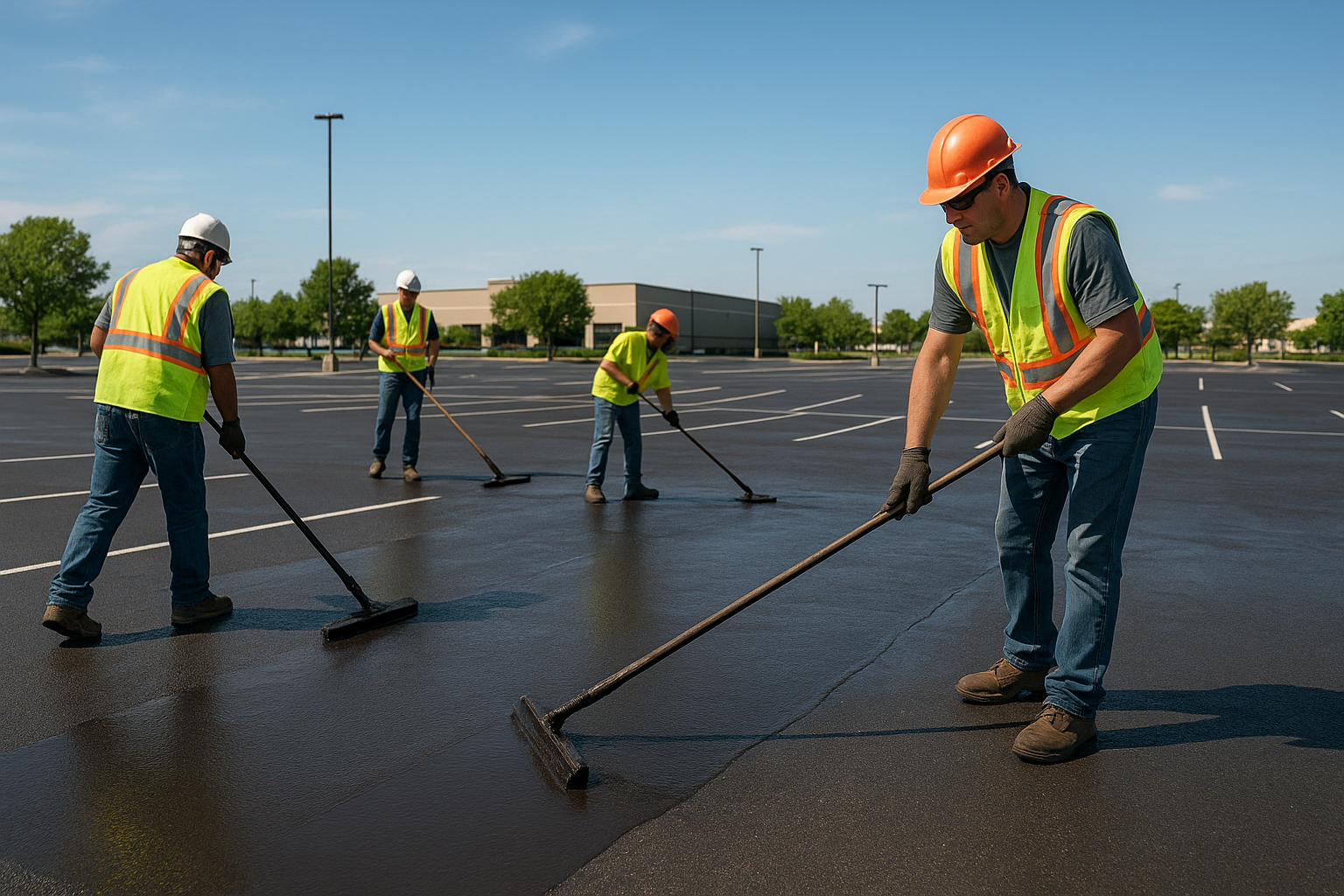
Even application is key to durable results from concrete sealing companies.
What Happens During a Concrete Sealing Project
Understanding the typical workflow helps property owners know exactly what to expect once a contract is signed. Below is the standard sequence most concrete sealing companies follow from start to finish.
Inspect and clean the surface: Technicians assess cracks, stains, and drainage patterns across the entire lot, then sweep debris and pressure wash the pavement thoroughly to remove oil, dirt, and loose material.
Repair cracks and damage: Visible cracks, potholes, and spalled edges are patched with an appropriate filler and allowed to cure fully before any sealant touches the surface.
Protect surrounding areas: Curbs, storm drains, landscaping beds, and building edges are masked off with tape or plastic sheeting to prevent overspray and staining.
Apply the sealant: Crews use commercial squeegees or spray equipment to lay down a uniform, even coat at the manufacturer's recommended thickness and coverage rate.
Cure and final inspection: The surface stays closed to foot and vehicle traffic for 24 to 48 hours, after which a final walkthrough confirms even coverage and proper adhesion.
Signs Your Pavement Needs Resealing or Restoration
Knowing when to call concrete sealing companies is just as important as knowing how to pick one. Specifically, watch for these warning signs:
Faded or dull color: Sealant naturally wears thin with UV exposure and traffic, leaving the surface looking gray or patchy.
Water that no longer beads: If water soaks in instead of forming droplets, the protective layer has likely worn away.
Hairline cracking: Small cracks widen quickly once moisture gets underneath, especially during Virginia's winter freeze-thaw cycles.
Efflorescence or white haze: A chalky white residue on pavers or concrete signals mineral deposits pushing through from below, which should be cleaned before resealing.
Shifting or loose pavers: Eroded joint sand allows units to rock underfoot, a clear sign restoration work is overdue.
How Much Do Concrete Sealing Companies Charge?
Pricing typically ranges from $0.15 to $0.50 per square foot, depending on surface condition, sealant type, and lot size. For instance, a small residential driveway might cost a flat fee of a few hundred dollars, whereas a large commercial parking lot could run into several thousand dollars. Notably, industry estimates suggest properly sealed asphalt can extend pavement life by several years compared to unsealed surfaces, which often offsets the upfront cost.
For a detailed regional pricing breakdown, see this guide on the best driveway sealcoating companies in Virginia, or this cost and timing resource on sealing your driveway: cost and timing for a full project-by-project breakdown.
A completed project combining seal coating and fresh striping.
Common Mistakes When Hiring Sealcoating Contractors
Unfortunately, many property owners make avoidable mistakes when hiring pavement contractors. Choosing the lowest bid without checking references, for example, often leads to rushed work and premature failure. Similarly, skipping proper surface cleaning or applying sealant in unsuitable weather can shorten the coating's lifespan dramatically.
Therefore, always request a written scope of work, confirm insurance coverage, and ask how the crew handles crack repair before sealing begins. This detailed checklist on how to choose the best sealcoating companies outlines additional red flags worth avoiding.
Maintenance Tips After the Sealing Project Is Complete
Once the project wraps up, proper maintenance stretches the sealant's protective life considerably. Above all, avoid parking heavy vehicles on freshly sealed surfaces for at least 48 hours, since the coating needs that window to cure fully. In addition, sweep debris and leaves regularly, as organic matter trapped against the surface can trap moisture underneath the sealant.
Meanwhile, address small cracks the moment they appear rather than waiting for the next full resealing cycle — early patching is dramatically cheaper than large-scale repair. Finally, schedule a professional inspection annually so a qualified contractor can catch wear patterns before they progress into costly structural issues.
Why Master Markings Is a Trusted Option in Virginia
Master Markings specializes in professional line striping and asphalt seal coating for commercial properties, parking lots, and roadways throughout Virginia. Their services include parking lot striping, ADA-compliant handicap markings, traffic and safety line marking, curb painting, crack sealing, and asphalt seal coating tailored to Virginia's climate conditions. Property managers, HOAs, retailers, and municipalities rely on this combination of precision and durability to keep pavement safe, compliant, and attractive.
For property owners planning a project on a limited budget, this resource on achieving seal coating goals on a budget offers practical cost-saving strategies. To request a quote or learn more about available services, visit Master Markings' website directly.
Frequently Asked Questions About Concrete Sealing Companies
What are concrete sealing companies?
Concrete sealing companies are contractors that apply protective sealants to concrete and asphalt surfaces to prevent water damage, cracking, and wear. Many also offer related services such as crack repair, striping, and curb painting. For a deeper walkthrough, see our News and Insights.
How do I choose the best concrete sealing companies in Virginia?
Look for licensed, insured contractors with local experience, verifiable reviews, and clear written estimates. Ask about the sealant type they use and whether they offer a workmanship warranty.
Why should I hire a professional instead of doing it myself?
Professional crews use commercial-grade equipment and proper surface preparation techniques that produce a longer-lasting result. DIY sealing often results in uneven coverage and a shorter lifespan.
What is the difference between concrete sealing and asphalt seal coating?
Concrete sealing typically uses acrylic or penetrating sealants for cement surfaces, while asphalt seal coating applies a coal-tar or asphalt-emulsion coating designed for blacktop. Both protect against moisture and UV damage but use different materials suited to each surface.
How much does concrete sealing cost?
Most projects range from $0.15 to $0.50 per square foot, depending on surface condition and sealant type. Larger commercial lots often receive lower per-square-foot pricing than small residential jobs.
How long does concrete sealant last?
A quality sealant application typically lasts one to three years before it needs reapplication, depending on traffic volume and climate exposure. Virginia's freeze-thaw winters can shorten this window slightly.
How long does a sealing project take to complete?
Most parking lots or driveways take one to two days from cleaning to final cure, though larger commercial properties may require additional time. Weather conditions can also affect scheduling.
What common mistakes should I avoid when hiring a contractor?
Avoid contractors who skip surface cleaning, apply sealant in poor weather, or refuse to provide references. Always confirm insurance coverage and get the scope of work in writing.
What certifications should a sealing contractor have?
Look for state business licensing, general liability insurance, and membership in industry groups when available. These credentials indicate accountability and adherence to accepted standards.
Can concrete sealing be done in cold weather?
Most sealants require surface and air temperatures above 50 degrees Fahrenheit to cure properly, so cold-weather application is generally not recommended. Reputable contractors schedule work around seasonal temperature windows.
Do these companies also handle ADA-compliant striping?
Many full-service pavement contractors, including Master Markings, combine sealing with ADA-compliant handicap markings and traffic line striping. Bundling these services in one visit reduces disruption to daily operations. For a deeper walkthrough, see our News and Insights.
How often should a parking lot be resealed?
Most commercial parking lots benefit from resealing every two to three years, though high-traffic areas may need more frequent attention. Regular inspections help catch cracking before it worsens.
Do concrete sealing companies offer warranties?
Many established contractors offer workmanship warranties ranging from one to two years on sealant application. Always ask for warranty terms in writing before signing a contract.
Can concrete sealing companies also seal and restore pavers?
Yes, many full-service contractors handle paver cleaning, joint-sand replacement, and sealing alongside traditional concrete and asphalt work. However, it's worth confirming they stock polymeric sand and the correct paver-specific sealant before hiring them for restoration work.
What causes efflorescence (white haze) on sealed concrete or pavers?
Efflorescence forms when mineral salts inside the concrete dissolve in moisture and rise to the surface as water evaporates, leaving a chalky white residue. A qualified contractor removes this buildup with a specialized cleaner before resealing, since sealing over efflorescence traps the problem underneath.
Final Thoughts
Ultimately, choosing among the many concrete sealing companies serving Virginia comes down to verifying credentials, comparing detailed quotes, and confirming a contractor's experience with local climate conditions, sealant chemistry, and paver restoration techniques. As outlined above, quality sealing protects pavement investments, supports ADA compliance, and improves overall safety for tenants, customers, and visitors. Above all, property owners who ask the right questions, recognize the warning signs covered here, and review real project examples are far more likely to select concrete sealing companies that deliver lasting, reliable results.

