Everything You Need to Know About Master Markings

Updated: Sep 16
Asphalt crack filling is the fastest, most cost-effective way to stop a small pavement crack from turning into a wallet-draining pothole. Whether you manage a public parking lot or maintain a private driveway, asphalt takes a beating year-round from sun, freeze-thaw cycles, and the constant weight and friction of vehicles. As a result, cracks are inevitable. However, ignoring them is where the real trouble starts — small cracks widen, water seeps into the base layer, and before long you're facing a full-depth repair instead of a simple fix. For a deeper walkthrough on choosing the right pavement partner, see our News and Insights.
In this guide, we'll cover everything you need to know about asphalt crack filling — what causes cracks in the first place, how professionals and DIYers approach the repair differently, the real cost of doing it right, and exactly how Master Markings handles this service for homes and businesses throughout Manassas, Virginia. By the end, you'll know precisely when a tube of cold-pour filler from the hardware store is enough, and when it's time to call in a professional crack repair crew.
What Is Asphalt Crack Filling and Why Does It Matter?
Asphalt crack filling is the process of injecting a flexible sealant — usually a rubberized or asphalt-emulsion compound — directly into a crack to block out water, debris, and plant growth. Unlike a full resurfacing job, crack filling targets the problem at the source before it spreads. In fact, the asphalt concrete that makes up most driveways and parking lots is engineered to flex slightly with temperature changes, but repeated expansion and contraction eventually opens hairline cracks that widen into real structural problems.
So why does this small repair matter so much? Consider the consequences of letting it slide:
Water infiltration. Once moisture reaches the gravel base beneath the asphalt, it erodes the foundation and causes the pavement above to sink or crumble.
Vehicle damage. Deep cracks and the potholes they create can damage tires, rims, and suspension components.
Liability risk. For commercial properties, cracked pavement is a trip-and-fall hazard that can expose a business to legal claims.
Curb appeal and property value. A cracked, patchy driveway or parking lot is an eyesore that hurts first impressions — and resale value.
Therefore, addressing cracks early with proper asphalt crack filling isn't cosmetic maintenance — it's a structural investment that protects everything underneath the surface.
Common Types of Asphalt Cracks (And What Causes Them)
Not all cracks are created equal, and identifying the type you're dealing with determines the right repair approach. Here are the most common patterns you'll encounter:
Alligator Cracking
This interconnected, reptile-skin pattern usually signals a failing base layer or sub-grade, often caused by excessive weight loads or poor original installation. Unfortunately, crack filling alone won't fix alligator cracking — it typically requires patching or full-depth repair.
Transverse and Longitudinal Cracks
These straight-line cracks run across (transverse) or along (longitudinal) the direction of pavement installation. They're commonly caused by temperature swings and are excellent candidates for standard asphalt crack filling.
Edge Cracks
Found near the outer edges of a driveway or parking lot, edge cracks often result from poor drainage or lack of shoulder support. In particular, Virginia's freeze-thaw winters accelerate this type of damage.
Reflective Cracks
These occur when cracks from an old layer of pavement "telegraph" upward through a newer overlay. Similarly, they respond well to flexible crack sealant that moves with the pavement instead of a rigid patch material.
Understanding environmental triggers is just as important as identifying crack type. For a detailed breakdown of how weather and drainage impact pavement longevity, read our guide on preventing cracking caused by environmental factors.
Asphalt Crack Filling vs. Crack Sealing: What's the Difference?
These two terms get used interchangeably, but there's an important distinction. Crack filling uses a less flexible, lower-cost material and is best for cracks that have mostly stopped moving — often called "dormant" cracks. Crack sealing, on the other hand, uses a hot, rubberized material with high flexibility designed for "active" cracks that continue to expand and contract with temperature changes.
In practice, most residential driveways benefit from crack filling, while high-traffic commercial lots and roadways typically call for crack sealing due to heavier loads and larger temperature swings. For a complete cost breakdown of both approaches, check out our article on News and Insights.
DIY Asphalt Crack Filling: Step-by-Step Instructions
If your cracks are narrow (under a quarter-inch), shallow, and not widespread, a DIY approach can work well. Above all, proper preparation matters more than the product you choose. Here's the process professionals follow, simplified for homeowners:
Step 1: Clean the Crack Thoroughly
Use a wire brush, putty knife, or compressed air to remove loose asphalt, dirt, grass, and debris from inside the crack. Any leftover material will prevent the sealant from bonding properly to the pavement edges, so take your time here.
Step 2: Dry the Area Completely
Moisture trapped inside a crack will prevent sealant from adhering correctly and can cause bubbling later. Therefore, wait for a dry, mild day — ideally above 50°F — and use a propane torch or leaf blower to eliminate any residual dampness before filling.
Step 3: Choose and Prepare Your Crack Filler
Cold-pour fillers come ready to use in a squeeze bottle or caulk tube, while hot-pour rubberized filler requires melting in a kettle to around 380°F before application. Choose the product rated for your crack width and local climate conditions.
Step 4: Apply the Filler Into the Crack
Pour or squeeze the sealant directly into the crack, slightly overfilling it to account for settling as the material cures. For wider cracks over half an inch, apply in thin layers rather than one thick pour to prevent sinking.
Step 5: Smooth and Level the Surface
Use a squeegee, putty knife, or trowel to level the filler flush with the surrounding pavement. A smooth finish prevents standing water and reduces the chance of tire damage or tripping hazards on walkways.
Step 6: Allow Proper Curing Time
Most cold-pour fillers need 24 to 48 hours of cure time before vehicle traffic, while hot-pour sealants can often handle traffic within a few hours. Consequently, always check the manufacturer's label and keep the area blocked off until fully set.
For homeowners who want a side-by-side comparison of DIY versus professional driveway repair outcomes, our article on repairing asphalt driveways walks through real before-and-after scenarios.
Hot-Pour vs. Cold-Pour Crack Filler: Which Should You Use?
This is one of the most common questions homeowners ask, and the honest answer is: it depends on your situation.
Cold-pour sealant is budget-friendly, easy to apply straight from the container, and perfect for small residential jobs. However, it tends to be less durable and may need reapplication within a year or two.
Hot-pour rubberized sealant requires specialized heating equipment, but it bonds more securely, flexes better with temperature swings, and typically lasts three to five years or longer — making it the preferred choice for driveways, commercial lots, and anywhere durability matters most.
In general, if you're treating a handful of small cracks on a budget, cold-pour works fine. But for larger properties, commercial lots, or cracks that reappear every season, hot-pour application by a professional crew delivers far better long-term value.
How Much Does Asphalt Crack Filling Cost?
Pricing for asphalt crack filling varies based on the length and depth of cracks, the material used, and whether you hire a professional or go the DIY route. As a rough guide:
DIY cold-pour kits: Typically $15–$30 per tube, covering a limited linear footage — fine for a handful of small cracks.
Professional crack filling: Usually priced per linear foot, with rates influenced by crack width, accessibility, and material grade.
Commercial-scale projects: Larger parking lots often receive volume pricing, especially when crack filling is bundled with seal coating or line striping.
Keep in mind that the cheapest option up front isn't always the most economical choice long-term. A poorly filled crack that fails within a season costs more in repeated labor and materials than a properly executed hot-pour repair. For an in-depth cost comparison specific to Virginia properties, see our guide on News and Insights.
When to Call a Professional for Asphalt Crack Repair
DIY crack filling has its place, but there are clear signs it's time to bring in a professional crew instead:
Cracks wider than half an inch or showing alligator patterns that suggest base failure
Large commercial lots where liability and ADA compliance are concerns
Cracks that return repeatedly despite previous DIY attempts
A need for seal coating or line striping alongside crack repair for a complete, uniform finish
Unfortunately, the pavement industry has its share of fly-by-night operators — sometimes called "gypsy rigs" — who show up unsolicited, use low-grade filler, and disappear before problems surface. We strongly recommend reading our consumer warning article on News and Insights before hiring anyone who knocks on your door. Instead, always vet contractors using a checklist like the one in our guide to News and Insights.
About Master Markings: Asphalt Crack Filling in Manassas
We are a family-owned business that has provided professional asphalt crack filling in Manassas and the surrounding Virginia communities since 1997. Over nearly three decades, we've built our reputation on a simple combination: real expertise, hands-on experience, and customer service that treats every job — large or small — with the same attention to detail.
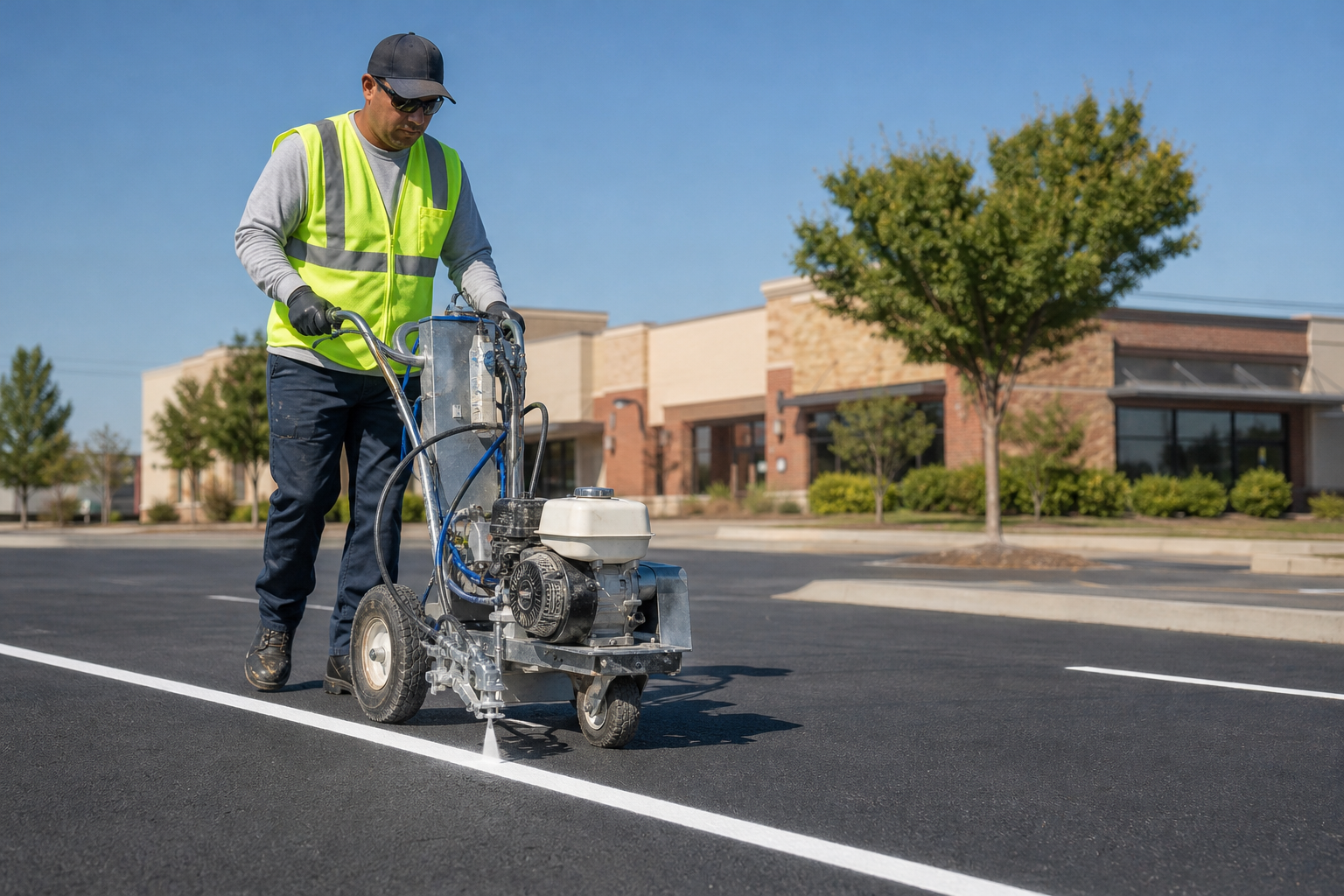
Our clients span residential homes, hospitals, restaurants, strip malls, small businesses, industrial buildings, churches, and parking garages. In addition to crack filling, we offer complete seal coating and line striping pavement services, allowing property owners to handle every pavement need under one roof. For commercial property managers specifically, our commercial asphalt crack repair guide for Virginia breaks down scheduling, compliance, and budgeting considerations unique to larger properties.
Our Asphalt Crack Filling Process
If you notice holes or cracks developing in your asphalt — or even grass beginning to sprout in the gaps — it's time to act before the damage grows larger or sinks further into the ground. By filling cracks promptly, we prevent asphalt deterioration from spreading, which keeps long-term repair costs from climbing. Just as importantly, a properly sealed surface is a safer surface, particularly for pavement used by the public. Curious how much of a visual difference this makes? See the transformation photos in our piece on how crack filling can make your driveway look new again.
We also pair crack filling with complementary services like seal coating, which adds an extra layer of protection against UV rays and water intrusion. Learn more about how this combination protects pavement in our article on News and Insights.
How to Prevent Asphalt Cracks From Coming Back
Crack filling solves today's problem, but prevention protects your investment long-term. Here's what actually works:
Seal coat every 2–3 years to shield asphalt from UV damage and water penetration — see our guide on whether News and Insights on seal coating's lifespan benefits.
Improve drainage so water doesn't pool against edges or seep beneath the surface.
Avoid heavy loads like RVs or moving trucks parked in one spot for extended periods.
Address cracks immediately rather than waiting for them to widen — this is the single biggest factor in long-term pavement health, according to the Federal Highway Administration's pavement preservation guidance.
For a complete seasonal maintenance checklist, explore our article on News and Insights, and if you're planning a brand-new installation, our guide to News and Insights covers how proper base preparation reduces future cracking from day one.
If you're comparing paving companies for a larger project alongside crack repair, our resource on News and Insights outlines exactly what to ask before signing a contract. Industry standards from the Asphalt Institute reinforce that consistent maintenance — not just repair after damage appears — is what separates a driveway that lasts 20 years from one that needs replacement in 10.
Frequently Asked Questions About Asphalt Crack Filling
What is asphalt crack filling?
Asphalt crack filling is a maintenance technique where a flexible sealant is applied directly into cracks in pavement to block water intrusion, prevent debris buildup, and stop cracks from spreading or deepening over time.
How much does asphalt crack filling cost?
DIY kits typically run $15–$30 per tube for small jobs, while professional crack filling is usually priced per linear foot based on crack width, material, and job accessibility. Commercial lots often receive discounted volume pricing.
Can I do asphalt crack filling myself?
Yes, for narrow cracks under a quarter-inch wide, a DIY cold-pour kit works well if the crack is thoroughly cleaned and dried first. However, wider cracks, alligator patterns, or commercial properties generally call for professional hot-pour application.
What is the best time of year for asphalt crack filling?
Mild, dry weather between 50°F and 85°F is ideal, which typically means spring or early fall in Virginia. Filling cracks before winter is especially important since freeze-thaw cycles rapidly widen untreated cracks.
How long does asphalt crack filler take to dry?
Cold-pour fillers generally need 24 to 48 hours before they can handle vehicle traffic, while hot-pour rubberized sealant often cures enough for light traffic within a few hours, depending on temperature and humidity.
What's the difference between crack filling and crack sealing?
Crack filling uses a lower-cost, less flexible material suited to dormant cracks that have mostly stopped moving, while crack sealing uses a hot, highly flexible rubberized compound built for active cracks that continue expanding and contracting seasonally.
Get Professional Asphalt Crack Filling in Manassas Today
In summary, asphalt crack filling is a small repair with an outsized impact — it stops water damage before it starts, keeps your pavement safer, and protects your property's curb appeal and value. Whether you tackle narrow cracks yourself with a cold-pour kit or bring in professionals for hot-pour sealing on a larger driveway or commercial lot, the key is acting early rather than letting small cracks become expensive problems.
If you need reliable asphalt crack filling in Manassas, contact Master Markings today to schedule a free estimate. With nearly 30 years of experience and a full suite of seal coating and line striping services, we're ready to help you protect your pavement for years to come.