


Parking Lot Striping Virginia: Complete 2026 Guide

Parking lot striping Virginia property owners trust does more than mark parking spaces — it protects drivers, pedestrians, and businesses from costly liability issues. Furthermore, crisp, well-maintained lines create a professional first impression for customers and tenants alike. Whether you manage a retail center, a homeowners association, or a municipal lot, faded or missing lines can quickly become a safety hazard and a compliance risk. In this guide, you will learn what parking lot striping involves, how much it typically costs across Virginia, and how to choose a reliable pavement marking company. Additionally, we will cover ADA requirements, seasonal timing, and simple maintenance tips that extend the life of your investment.
Quick Answer: Parking lot striping Virginia costs typically range from $0.10 to $0.25 per linear foot, with most commercial lots costing $300 to $1,200 for a full restripe. Spring and early fall offer the best conditions for durable, long-lasting lines.
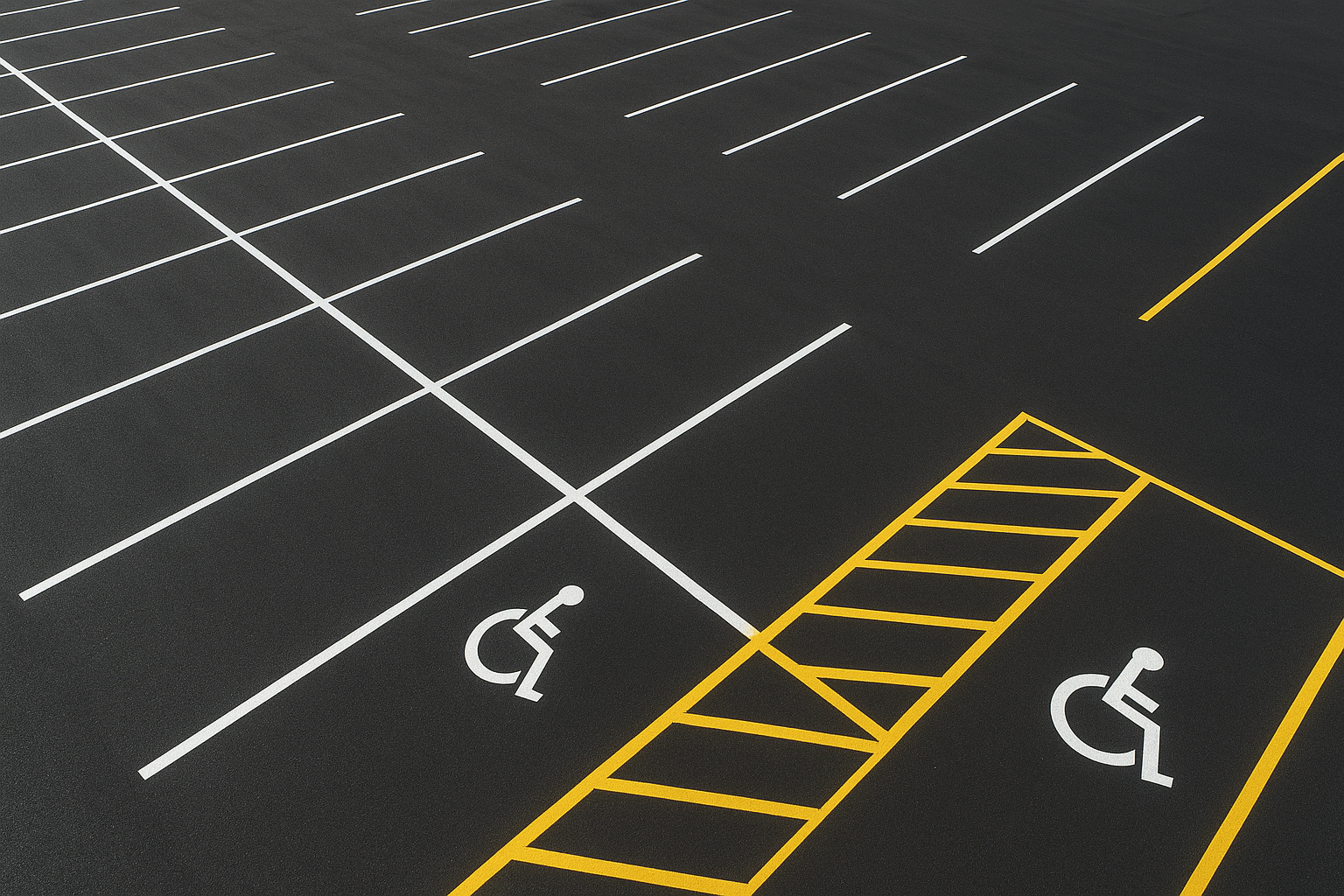
Professional parking lot striping Virginia crews rely on precise layouts for safety and compliance.
What Is Parking Lot Striping?
Parking lot striping is the process of painting lines, symbols, and markings on asphalt or concrete surfaces to organize traffic flow, define parking spaces, and meet safety regulations. It typically includes standard parking stalls, ADA-compliant handicap spaces, directional arrows, fire lanes, and curb markings. In short, it turns a blank paved surface into a safe, organized, and legally compliant space.
Beyond basic organization, striping also protects property owners from liability. For instance, unclear crosswalks or missing stop bars can contribute to accidents that expose businesses to legal claims. According to the Federal Highway Administration's Manual on Uniform Traffic Control Devices (MUTCD), pavement markings must meet specific reflectivity and placement standards to remain effective, especially at night or in poor weather. As a result, professional contractors follow these federal guidelines alongside Virginia-specific requirements to ensure every lot passes inspection and keeps drivers safe.
Why Line Striping Matters for Virginia Businesses
Beyond legal compliance, well-executed line striping directly affects how customers perceive a business. Specifically, faded or crooked lines signal neglect, while crisp markings suggest attention to detail and professionalism. In contrast, a freshly striped lot with clear ADA spaces, fire lanes, and directional arrows reduces confusion and prevents fender-benders in busy retail or municipal lots.
Moreover, striping supports efficient traffic flow. Clearly marked entrances, exits, and one-way lanes reduce congestion during peak hours, which matters for shopping centers and multi-tenant properties. For a deeper look at how consistent maintenance pays off, this article on the benefits of line striping your parking lot outlines the return on investment property managers can expect.
Because Virginia experiences hot, humid summers and freezing winters, pavement markings wear faster than in more temperate climates. Therefore, property owners who invest in durable, professional-grade paint see fewer repaints over time and lower long-term maintenance costs.
Virginia Regulations and ADA Compliance for Pavement Markings
Every commercial parking lot in Virginia must include accessible parking spaces that comply with the Americans with Disabilities Act (ADA), a federal civil rights law that sets minimum accessibility standards. Specifically, the U.S. Access Board requires at least one van-accessible space for every six accessible spaces, along with proper signage, access aisles, and the international symbol of accessibility painted in a contrasting color.
In addition to ADA rules, many Virginia municipalities enforce local fire code requirements for fire lane markings and curb painting. For example, fire lanes typically require red curb paint with white lettering reading "NO PARKING FIRE LANE." Consequently, property managers who skip these details risk fines, failed inspections, or worse, delayed emergency response.
Working with an experienced parking lot striping Virginia contractor helps ensure every space, symbol, and lane meets both federal ADA standards and local Virginia code requirements from the start, avoiding costly rework later.
A striping machine applies durable traffic paint during a commercial pavement marking project.
How Much Does Parking Lot Striping Cost in Virginia?
Parking lot striping costs in Virginia typically range from $0.10 to $0.25 per linear foot for standard lines, though total project cost depends on lot size, layout complexity, and paint type. Most small to mid-sized commercial lots cost between $300 and $1,200 for a full restripe.
Several factors influence final pricing:
Lot size and total number of stalls
Type of paint used (water-based, oil-based, or thermoplastic)
Additional markings, such as ADA symbols, arrows, or stencils
Surface preparation needed, including pressure washing or crack sealing
For instance, a lot requiring new ADA-compliant handicap spaces or fire lane repainting will cost more than a straightforward restripe of existing lines. As a result, it is wise to request a detailed, itemized quote rather than a flat per-space estimate. You can get a free quote from Master Markings to see exact pricing for your property's size and needs.
The Parking Lot Striping Process: Step by Step
Professional crews follow a consistent process to deliver durable, code-compliant results. Above all, skipping steps like surface prep leads to premature fading.
Inspect and clean the surface: A professional crew inspects the entire lot for cracks, potholes, and debris, then thoroughly sweeps or pressure washes the asphalt so new paint adheres properly and lasts longer.
Repair cracks and potholes: Any cracks or holes are filled and sealed before striping begins, since painting over damaged asphalt causes lines to crack and fade prematurely within a single season.
Measure and mark layout: Technicians measure stall widths, drive aisles, and ADA space requirements using chalk lines or lasers to ensure every marking meets Virginia code and maximizes usable parking spaces.
Apply striping paint: Using specialized striping machines, crews apply durable, reflective traffic paint in straight, consistent lines, symbols, and stencils according to the approved layout plan.
Cure and final inspection: Fresh paint is left to cure for the recommended drying time, typically thirty minutes to a few hours, before the lot reopens, followed by a final quality walkthrough.
Best Time of Year for Pavement Striping in Virginia
Spring and early fall offer the best striping conditions in Virginia because temperatures stay consistently between 50°F and 90°F, which is ideal for proper paint curing. In contrast, summer heat can cause paint to dry too fast and lose adhesion, while winter cold slows curing and risks cracking.
Additionally, scheduling striping during lower-traffic periods, such as early mornings or weekends, minimizes disruption for tenants and customers. For retail centers, this often means avoiding peak shopping seasons like the winter holidays. Property managers who plan ahead and book seasonal maintenance early typically secure better scheduling flexibility and avoid last-minute rush pricing.
ADA-compliant handicap markings are a required part of parking lot striping Virginia projects.
Parking Lot Striping Virginia: How to Choose the Right Contractor
Choosing the right team matters as much as the paint itself. Above all, look for a contractor with proven local experience, since Virginia's climate and code requirements differ from other regions. A trusted professional parking lot striping team will understand ADA compliance, fire lane codes, and the seasonal timing discussed earlier.
Furthermore, ask potential contractors about the paint types they use, their equipment, and turnaround time. Reliable companies provide written estimates, insurance documentation, and references from other commercial properties. If you need line striping done for your parking lot, this resource on scheduling striping services with Master Markings explains what to expect from consultation through project completion.
Finally, compare pricing carefully, but do not choose based on cost alone. In fact, the cheapest bid often uses lower-grade paint that fades within months, ultimately costing more in repeat service calls. Learn more about pavement maintenance options at mastermarkings.com.
Maintenance Tips to Extend the Life of Your Line Striping
Regular maintenance keeps parking lot lines visible and compliant between full restripes. Consequently, small habits make a significant difference in longevity.
Sweep the lot weekly to remove debris and sand that wear down paint.
Address oil stains and spills quickly, since chemicals break down pavement markings.
Seal coat the asphalt every two to three years, which also protects the paint layer beneath.
Repaint high-traffic lines, such as entrances and crosswalks, more frequently than perimeter markings.
As a result, property owners who follow a consistent maintenance schedule often stretch the life of their striping from one year to two or three, reducing overall costs. According to industry estimates, a well-maintained asphalt surface with regular seal coating can extend pavement life by several years compared to neglected lots, according to the general properties of asphalt as a material.
Frequently Asked Questions
What is parking lot striping?
Parking lot striping is the process of painting lines, symbols, and markings on a paved surface to organize traffic, define parking stalls, and meet safety and ADA requirements. It typically includes standard spaces, handicap markings, arrows, and curb painting.
How much does parking lot striping cost in Virginia?
Parking lot striping Virginia costs generally run between $0.10 and $0.25 per linear foot, with most small to mid-sized commercial lots totaling $300 to $1,200. Final pricing depends on lot size, paint type, and the number of ADA or specialty markings needed.
How long does parking lot striping take to dry?
Most striping paint dries to the touch within 30 minutes to an hour under favorable conditions. However, full curing can take a few hours, so lots are usually kept closed briefly after application.
How often should parking lot lines be repainted?
Most commercial lots need restriping every one to three years, depending on traffic volume and paint quality. High-traffic areas like entrances and crosswalks often fade faster and may need touch-ups sooner.
Is parking lot striping required by law in Virginia?
Yes, commercial properties in Virginia must provide ADA-compliant accessible parking, and many localities require fire lane markings under local fire code. Failing to maintain compliant striping can result in fines or failed inspections.
What paint is used for parking lot striping?
Contractors typically use water-based traffic paint, oil-based paint, or thermoplastic materials, each offering different durability and drying times. Water-based paint is common because it is durable, low-odor, and environmentally friendly.
What is the difference between parking lot striping and asphalt seal coating?
Striping applies painted lines and symbols on top of the pavement, while seal coating applies a protective liquid layer over the entire asphalt surface to prevent water damage and oxidation. Many property owners schedule both together for full pavement maintenance.
Can parking lot striping be done in winter?
Striping is possible in winter but not ideal, since cold temperatures slow paint curing and increase the risk of cracking or poor adhesion. Most Virginia contractors recommend spring or fall for the best results.
What are common mistakes property owners make with line striping?
Common mistakes include skipping surface prep, choosing the cheapest bid with low-grade paint, and delaying restriping until lines are nearly invisible. These shortcuts often lead to faster fading and higher long-term costs.
How do I choose a parking lot striping Virginia contractor?
Look for a parking lot striping Virginia contractor with local experience, proper insurance, transparent written estimates, and knowledge of ADA and fire code requirements. Checking references from other commercial properties also helps confirm reliability.
What ADA requirements apply to parking lot striping?
ADA rules require a minimum ratio of accessible parking spaces, including van-accessible spots, proper signage, and access aisles painted in contrasting colors. The exact number of required spaces scales with the total lot size.
How long does striping last?
Quality striping typically lasts one to three years depending on traffic, weather exposure, and paint type. Regular sealcoating and prompt repair of oil stains can extend the visible life of the lines.
Do I need a permit for parking lot striping?
Most routine restriping projects do not require a permit, but new lot layouts or changes to accessible parking counts may need local approval. It is best to confirm with your municipality before major layout changes.
What's the best time of year to stripe a parking lot in Virginia?
Spring and early fall are ideal in Virginia because temperatures between 50°F and 90°F allow paint to cure properly. Extreme summer heat and winter cold can both compromise adhesion and drying time.
How can I extend the life of my parking lot lines?
Sweeping regularly, cleaning oil spills quickly, and seal coating the asphalt every two to three years all help protect painted lines. Scheduling touch-ups on high-traffic areas also reduces the need for a full restripe.
Conclusion
In summary, parking lot striping Virginia property owners invest in protects drivers, keeps businesses ADA-compliant, and preserves curb appeal year-round. From understanding costs and seasonal timing to choosing a contractor with real local experience, each decision affects how long your lines stay crisp and how safe your lot remains. Above all, partnering with a dependable local team, like the crews at Master Markings, helps ensure every stall, symbol, and fire lane meets Virginia's standards from the first coat to the last touch-up.

