


Pot Hole Repair Guide: Fix Parking Lot Damage Fast

Updated: Sep 16
Pothole repair stops a small pavement failure from turning into an expensive liability headache, and doing it right the first time saves property owners thousands of dollars in repeat work. Because potholes form quickly once water seeps beneath the asphalt surface, a hairline crack can spiral into a costly hazard within weeks. In fact, the Federal Highway Administration notes that moisture infiltration and freeze-thaw cycles rank among the leading causes of pavement failure nationwide. As a result, property managers, business owners, and homeowners associations across Virginia need a clear plan for spotting damage early and choosing the correct repair method. This guide goes further than most: it covers what pothole repair actually involves, every professional repair method available, real cost ranges, a step-by-step patching process, DIY versus contractor decision points, ADA compliance, how to vet a paving contractor, and how seal coating stops potholes from ever forming.
What Is Pothole Repair?
Pothole repair is the process of removing broken or missing asphalt from a hole in the pavement and replacing it with new material to restore a safe, level surface. Crews typically clean out debris, apply a bonding tack coat, and compact fresh asphalt or cold patch into the cavity. A properly finished repair sits flush with the surrounding pavement and resists water intrusion for years, not months.
Because pavement is a layered system, however, a lasting repair depends on more than simply filling the hole. Technicians must address the base beneath the surface, since a soft or saturated base will cause the patch to fail again within months. For that reason, professional crews inspect the surrounding asphalt concrete, a mixture of aggregate and bitumen binder used for most paved surfaces, before choosing a repair method. Similarly, unrepaired potholes often spread damage to nearby pavement, which makes early intervention far cheaper than full-lot resurfacing. Consequently, catching damage early and matching the technique to the severity of the hole is the difference between a temporary patch and a lasting fix.
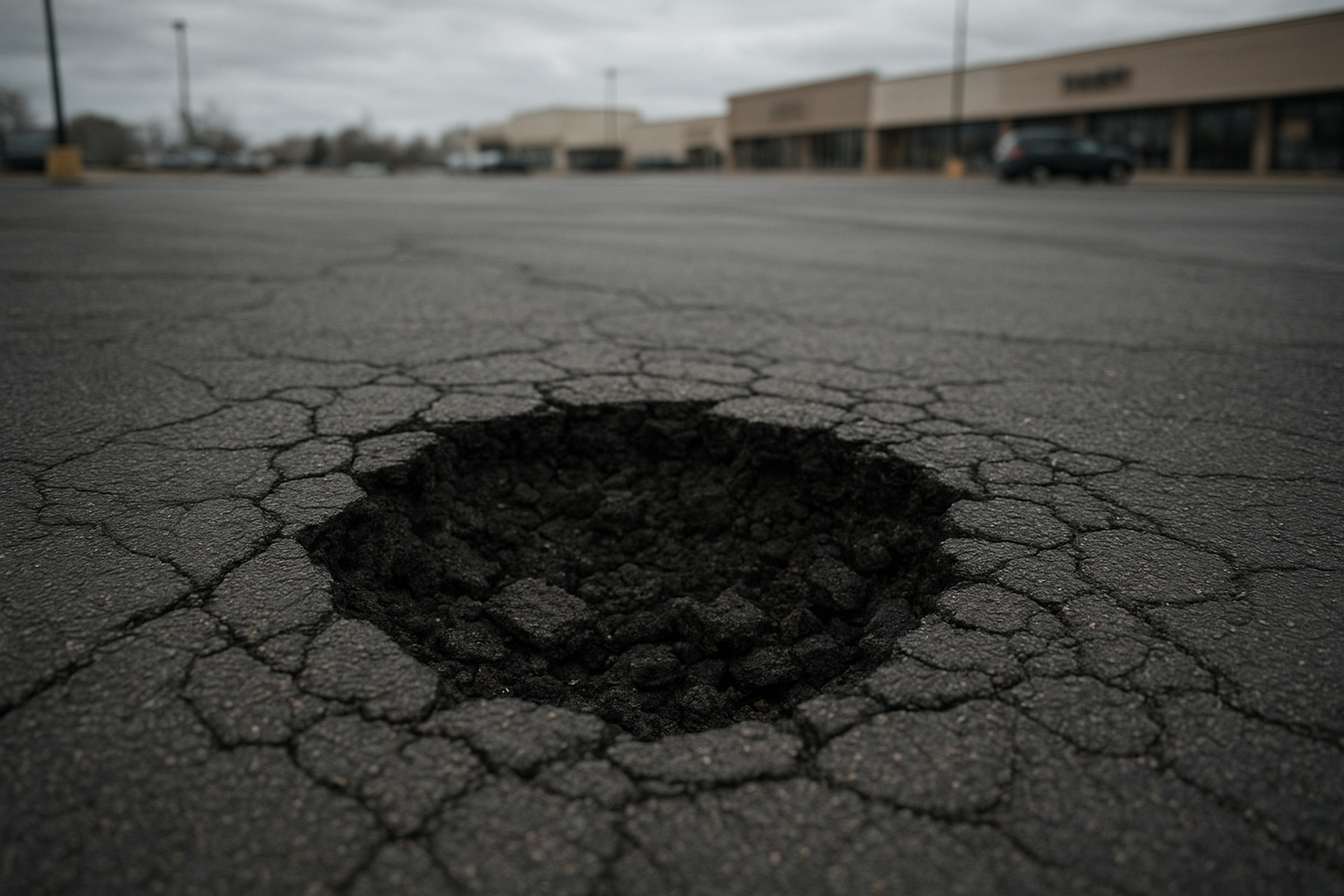
Untreated pavement damage like this is exactly why timely pothole repair matters for busy parking lots.
Why Do Potholes Form in Parking Lots?
Potholes rarely appear overnight. Instead, they develop through a predictable cycle of water damage and traffic stress. First, water seeps into small cracks in the asphalt. Then, during freezing temperatures, that trapped moisture expands through a process known as freeze-thaw weathering, which pushes the pavement layers apart. As vehicles continue driving over the weakened spot, the surface eventually collapses and forms a pothole.
Several factors accelerate this process across Virginia's climate:
Freeze-thaw cycles during winter months
Heavy delivery trucks and repeated turning traffic
Poor drainage or standing water in low spots
Aging asphalt that has lost its flexible binder
Unsealed cracks that allow water to penetrate the base
According to industry damage estimates, pothole-related vehicle repairs cost U.S. drivers roughly $3 billion every year in tire, wheel, and suspension damage. Likewise, property owners face rising liability risks when a pothole causes a slip-and-fall or vehicle accident on their lot. Therefore, sealing small cracks before they widen is one of the most cost-effective forms of pavement maintenance available, and it pairs well with routine crack repair services.
5 Warning Signs Your Pavement Needs Pothole Repair
Spotting the early signals of pavement failure gives property managers a chance to schedule repairs before a hole becomes a hazard. Watch for the following:
Alligator cracking — a web of interconnected cracks that signals a failing base layer underneath.
Standing water after rainfall, which points to poor drainage and accelerates erosion below the surface.
Crumbling edges around existing cracks, indicating the binder has lost flexibility.
Depressions or dips that fill with water even before a hole fully forms.
Loose gravel or debris scattered near a soft spot, a sign the surface layer is already breaking apart.
In particular, any of these signs near a drive lane, drain, or handicap-accessible route should move pothole repair to the top of your maintenance list. Above all, waiting until a hole is visible almost always costs more than addressing the warning signs first.
Proven Methods for Repairing Potholes in Parking Lots and Roads
Not every pothole calls for the same fix. Depending on the size of the damage, the weather, and the traffic load, paving crews choose from several proven repair methods, each explained below.
Throw-and-Roll Cold Patch Repair
Throw-and-roll patching uses pre-mixed cold asphalt that is shoveled directly into the pothole and compacted with a plate tamper or vehicle tire. Because it requires no heating equipment, this method works well for emergency repairs during cold weather or off-hours. However, it is generally considered a temporary fix, since the bond between old and new asphalt is weaker without a tack coat and proper edge preparation.
Semi-Permanent Hot Mix Patching
Semi-permanent patching starts by squaring the pothole's edges with a saw, removing loose debris, and applying a tack coat before filling the area with heated asphalt. Crews then compact the material in layers using a roller or plate compactor. This is the most common method for commercial parking lot pothole repair, since it balances durability with reasonable turnaround time.
Infrared Asphalt Repair
Infrared repair heats the existing asphalt around the pothole until it becomes workable again, then blends it with new material to create a seamless bond with no cold joint. As a result, this technique is ideal for isolated potholes where the base beneath the surface is still sound, and it minimizes disruption to daily operations at busy commercial sites.
Full-Depth Reclamation for Severe Pothole Damage
When potholes cluster together or repeatedly reappear in the same section of pavement, the base itself has usually failed beyond simple patching. Full-depth reclamation pulverizes the existing asphalt and base material on site, blends it with a stabilizing agent, and repaves the section as a single structural unit. Although it costs more upfront than a standard patch, this method resets the entire pavement structure and typically outlasts several rounds of repeated cold patch repair combined.
Proper compaction during pothole repair prevents the patch from settling or cracking again.
Step-by-Step Pothole Patching Process
While techniques vary by project size, most professional repairs follow the same core sequence:
Assess and mark the damage. Inspect the pothole to measure its depth and width, check for surrounding cracks, and mark the repair boundary so the cut lines create clean, square edges for the patch.
Clean and square the hole. Remove loose asphalt, dirt, and standing water from the cavity using a broom, blower, or saw cut so the new material bonds tightly to solid, stable pavement.
Apply a tack coat. Coat the walls and base of the cleaned pothole with a liquid asphalt bonding agent to help the new patch adhere firmly to the surrounding pavement layers.
Fill and compact the asphalt. Add hot mix, cold patch, or infrared-heated asphalt into the hole in layers, compacting each layer with a plate tamper or roller to remove air pockets and achieve density.
Seal the edges and finish. Smooth the patch flush with the surrounding surface, seal the perimeter seam to block water intrusion, and allow the repair to cure before reopening the area to traffic.
How Much Does Pothole Repair Cost?
Pricing depends heavily on the size of the pothole, the repair method, and regional labor rates. Generally speaking, larger commercial lots with widespread damage receive a per-square-foot quote rather than a per-pothole price.
These figures are general estimates; actual pothole repair cost varies by depth, accessibility, and traffic volume. For an accurate number, request a site visit through Master Markings so a technician can evaluate the specific damage.
How Long Does a Professional Pothole Patch Take?
Most single potholes take 30 to 90 minutes to patch, while a full parking lot with multiple holes may take one to three days depending on crew size and access. Cure time before the area can handle traffic ranges from a few hours to 24 hours, depending on the method used and the outdoor temperature. In contrast, full-depth reclamation projects run longer because the section must be pulverized, stabilized, and repaved before curing. Consequently, scheduling around business hours matters just as much as choosing the right repair method, especially for retail lots that cannot close overnight.
DIY Pothole Repair vs. Hiring a Paving Professional
Homeowners can often handle small, shallow potholes on a private driveway using a cold patch bag from a hardware store. If you are considering that route, this guide on repairing asphalt driveways walks through the basics safely.
On the other hand, commercial parking lots come with added complications, and improperly repaired areas can create new liability exposure. Furthermore, unlicensed "gypsy" paving crews sometimes offer cheap patch jobs that fail within weeks; this breakdown of common paving scams explains what to watch for before hiring anyone. In short, DIY works fine for minor residential fixes, but larger properties benefit from a licensed contractor who understands base repair, drainage, and compliance standards.
Pothole Repair Compliance: ADA Rules and Liability Risks
Repairs near handicap-accessible spaces must meet ADA slope and surface requirements, which limit how steep a patched surface can be and how smooth the transition must be between old and new asphalt. Specifically, an uneven patch near a curb ramp or accessible route can create a tripping hazard that exposes the property owner to a lawsuit, even if the repair itself looks fine to the untrained eye.
In addition, insurance carriers increasingly ask for documentation showing when pavement was last inspected and repaired. Therefore, keeping dated photos and invoices of every pothole repair not only protects a property from liability claims but also supports insurance renewals and lease compliance reviews for commercial landlords.
Choosing a Pothole Repair Contractor: A 6-Point Checklist
Not every paving crew delivers the same quality of work. Before signing a contract, run through this checklist:
Licensing and insurance: ask for proof of liability coverage before any crew steps onto your property.
Written scope of work: a legitimate contractor details the repair method, material type, and square footage in writing.
Local references: ask for recent commercial jobs you can drive by and inspect yourself.
Equipment on hand: saws, compactors, and tack coat sprayers indicate a properly equipped crew rather than a driveway-only operation.
Warranty terms: a confident contractor stands behind the patch for at least one full season.
Full-service capability: a company that can also handle line striping, seal coating, and full-lot resurfacing signals long-term reliability. Master Markings can restore any commercial property parking lot from initial pothole repair through final striping.
Preventing Future Potholes With Seal Coating
Once a pothole is patched, prevention becomes the priority. Seal coating protects the asphalt surface from sun, moisture, and chemical exposure that gradually breaks down the binder holding pavement together. In addition, pairing seal coating with routine crack sealing stops water from ever reaching the base layer in the first place. These same principles apply to residential surfaces too; our tips for sealing asphalt driveways cover the process step by step for homeowners.
Property managers and HOAs across Virginia often schedule seal coating every two to three years alongside line striping refreshes, since both services are typically performed at the same time to minimize disruption. Master Markings offers combined pavement maintenance plans, including crack sealing, seal coating, and ADA-compliant striping, so contact mastermarkings.com to schedule an inspection before winter weather sets in.
Regular seal coating reduces the need for repeated pothole repair over the life of a parking lot. For a deeper walkthrough, see our Parking Lot Painters.
When Is the Best Time for Pothole Repair in Virginia?
Late spring through early fall is the ideal window because warmer temperatures help asphalt bond and compact properly. During this stretch, hot mix and infrared repairs cure faster and last longer than repairs made in cold weather. In contrast, winter potholes usually get a cold patch as a temporary fix, since hot mix plants often close or scale back production once temperatures drop. As a result, savvy property managers schedule a spring inspection immediately after the freeze-thaw season ends, when new potholes are easiest to spot and permanent repairs can be scheduled right away.
Final Thoughts on Pothole Repair and Pavement Care
In summary, pothole repair is not a one-size-fits-all task. It requires matching the right method, whether cold patch, hot mix, infrared, or full-depth reclamation, to the size and severity of the damage. Above all, addressing small cracks and scheduling seal coating on a regular basis will prevent most potholes before they ever form. Consequently, property owners who invest in routine maintenance typically spend far less over time than those who wait until a full resurfacing becomes unavoidable. Whether you manage a small driveway or a busy retail parking lot, a clear pothole repair and prevention plan keeps pavement safe, compliant, and attractive year-round.
Frequently Asked Questions About Pothole Repair
What is pothole repair?
Pothole repair is the process of removing damaged asphalt and replacing it with new material so the pavement is level, stable, and water-resistant again. Crews clean the hole, apply a bonding agent, and compact fresh asphalt into the cavity.
How long does pothole repair take to complete?
Most single potholes take 30 to 90 minutes to patch, while a full parking lot with multiple holes may take one to three days. Cure time before the area can handle traffic ranges from a few hours to 24 hours depending on the method used. For a deeper walkthrough, see our News and Insights.
How much does pothole repair cost for a parking lot?
Small cold patch repairs often cost between $75 and $250 per pothole, while larger hot mix or infrared repairs can range from $300 to $1,000. Commercial lots with widespread damage may need a per-square-foot quote instead.
What is the difference between cold patch and hot mix pothole repair?
Cold patch uses pre-mixed asphalt that can be applied without heating equipment, making it fast but less durable. Hot mix patching requires heated asphalt and compaction equipment, producing a stronger, longer-lasting repair.
Can I repair a pothole myself?
Homeowners can often fill small, shallow potholes on a driveway using a cold patch bag and hand tamper. However, larger potholes, commercial lots, and any repair near ADA-compliant markings should be handled by a professional paving contractor.
Why do potholes keep coming back after repair?
Potholes often return because the underlying base material was never fixed, only the surface. If water continues entering through nearby cracks, the same weak spot will typically fail again within a season or two.
What is the best time of year for pothole repair in Virginia?
Late spring through early fall is ideal because warmer temperatures help asphalt bond and compact properly. Cold weather patching is possible using cold mix, but it is generally a temporary fix until warmer conditions allow a permanent repair.
How long does a professional asphalt patch last?
A properly installed hot mix or infrared patch typically lasts three to five years, and sometimes longer with routine seal coating. Poorly compacted or cold patch repairs often need reworking within one year.
Is pothole repair different for parking lots than for roads?
The core repair technique is similar, but parking lots often need repairs coordinated around business hours and ADA-compliant markings, while roadways prioritize traffic control and load capacity. Commercial lots also tend to use seal coating more frequently.
What are common mistakes in pothole repair?
Common mistakes include skipping the tack coat, failing to remove all loose debris, and not compacting the patch thoroughly. Rushing a repair in wet or freezing weather also shortens the lifespan of the fix.
Does seal coating prevent potholes?
Seal coating does not repair existing potholes, but it does protect surrounding asphalt from water, sun, and chemical damage that leads to new potholes. Pairing seal coating with crack sealing significantly extends pavement life.
How do I know if a pothole needs professional repair?
If a pothole is deeper than two inches, wider than 12 inches, or located near a drain, curb, or high-traffic lane, it typically needs professional assessment. Repeated failures of a DIY patch are also a sign to call a paving contractor.
What tools do professionals use for pothole repair?
Professional crews rely on a concrete or asphalt saw for squaring edges, a hand tamper or vibratory plate compactor for density, an infrared heating panel for seamless bonds, and a tack coat sprayer to bond old and new asphalt together securely.
How do I report a pothole on a Virginia public road?
Virginia drivers can report potholes on state-maintained roads directly through the Virginia Department of Transportation, which dispatches crews based on severity and traffic volume. Private lots and driveways, however, are the owner's responsibility and should be reported to a licensed paving contractor instead.

